
Electric Fat Bikes
Electric fat bikes trade efficiency for grip. Tyres around 4in wide spread the load, so a fat tyre electric bike floats over sand, snow and loose gravel rather than cutting into it. The two here are $1,899 and $1,999, weigh 31.8 and 34.5 kg, and publish 89 and 105 km. Those are the heaviest non-cargo bikes we sell, and the weight is the whole trade.
Price range: $1,899–$1,999
- 1-year warranty on frame, motor and battery
- Free shipping over threshold
- 14-day ride-it-and-see returns
- Dispatched within 2 business days
3 bikes
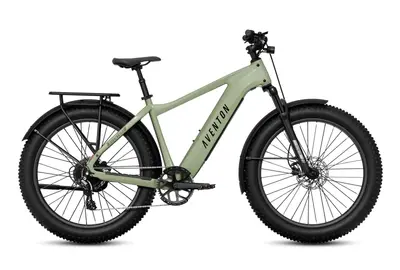
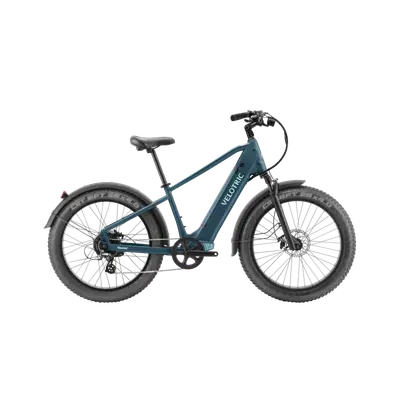
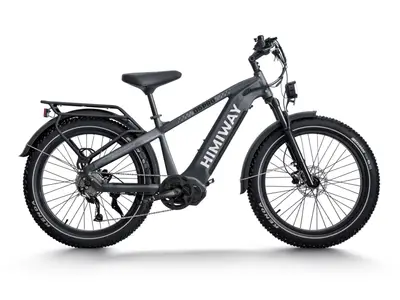
Do not buy a fat tire ebike for a surface you rarely ride
This is the category people over-buy most. A 4in tyre is brilliant on soft ground and a liability everywhere else: more rolling resistance, more weight, more battery drained per kilometre, and a bike that is genuinely hard to lift onto a rack at 34.5 kg.
If your riding is 90% tarmac and 10% towpath, a normal tyre with a bit of width does that better. Buy a fat tyre bike because you actually ride sand, snow or deep loose gravel on a regular basis. Our guide to fat tyre bikes goes through the maths in full.
What the two bikes here actually differ on
The Aventon Aventure 3 at $1,999 is the one in stock and the stronger bike: 733 Wh, 80 Nm, 4in tyres, a published 105 km, and 34.5 kg with a 400 lb total limit. Its Sensor Switch lets you pick torque or cadence sensing, which is unusual at the price and genuinely useful on loose ground.
One thing to get right before you order: the standard Aventure 3 is a Class 2 bike capped at 20 mph. The 28 mph model is the separate Aventure 3 HS. Listings elsewhere blur those two together, and we corrected our own spec sheet after checking it against Aventon directly.
The Velotric Nomad 1 Plus at $1,899 is discontinued, so treat it as stock-dependent. It runs 691 Wh, 75 Nm, an 80 mm suspension fork, a step-thru frame and a 440 lb load capacity.
Range on a fat bike is not range on a normal bike
Both bikes here carry a big battery, 691 and 733 Wh, and still publish less range than lighter models on smaller packs. The Velotric T1 on the gravel page gets 113 km out of 352.8 Wh, which is roughly half the battery for more distance.
That is the fat tyre tax, and it is not a fault. Pushing a wide, soft tyre through sand takes more energy than rolling a narrow one down a road. Just size the battery to the trip you take on the surface you take it on, and ignore the headline number.
Straight answers
What is an electric fat bike?
An e-bike on tyres around 4in wide, which spread the bike's weight over a larger contact patch so it floats on soft ground instead of sinking. Both bikes here are in that class.
Is an electric fat bike for snow worth it?
Yes, on loose or packed snow, which is what the tyre width is for. Ice is a different problem and needs studs, not width. Salt is the thing that actually kills bikes over a winter, so rinse it off.
How heavy are electric fat bikes?
31.8 kg and 34.5 kg for the two here. That is heavier than everything we sell except the cargo longtails, and it rules out most car racks and any storage that involves stairs.
How fast does the Aventure 3 go?
20 mph. It is a Class 2 bike. The 28 mph version is the separate Aventure 3 HS, which is a different model, and plenty of listings elsewhere get this wrong.
Which is the best fat tire electric bike here?
The Aventon Aventure 3 at $1,999, on stock alone: it is the one currently available, and it has the bigger battery, more torque and a switchable torque sensor. Note it is a 4 inch tire electric bike, so gravel tracks are still handled better by a 42c tyre on a lighter frame.