
Marcus Hale · United States · 9 min read
Are eBikes Worth It? The Honest Answer
Published 2026-09-05
TL;DR
The number that decides it is not the price, it is how many car trips the bike actually replaces. Replace four or five short car journeys a week and an e-bike pays for itself in running costs alone, at roughly $0.10 per 100 km against $8 to $15 by car. Replace none and it is an expensive way to get exercise you could have had for less. It is worth it for commuters, hilly routes, people returning to cycling and anyone carrying loads. It is not worth it for flat two-kilometre trips or riders with nowhere secure to keep it.
I ran the numbers on my second car in 2019: insurance, fuel, parking, servicing, the lot. It cost more per month than most of the bikes we sell cost once. I sold it, and I have a spreadsheet about it that everyone in the company has been shown at least twice.
So I am not neutral. But the honest answer to whether an e-bike is worth it is not yes, it is: depends entirely on one number, and most articles asking the question never mention it.
Are ebikes worth it? It comes down to one number

Not the purchase price. **How many car trips a week the bike actually replaces.** That single figure decides the entire question, and everything else is detail.
Replace four or five short car journeys a week and the maths gets comfortable quickly. Replace one and you own an expensive bicycle. Replace none and you own an ornament, which is a fine thing to own but is not what you were promised.
Be honest with the estimate rather than optimistic. The trips a bike genuinely replaces are the short, local, predictable ones: the commute, the school run, the shop, the station. Not the motorway drive you take twice a year, which no bike was ever going to touch.
Do ebikes save money? The honest maths

Running costs are where it is not close. Charging a typical 500 Wh pack costs about $0.12 to $0.20. Ridden, that works out around **$0.10 per 100 km against $8 to $15 for the same distance by car**, before parking, before servicing, before the insurance you pay whether the car moves or not.
The purchase is the part that needs care. Most riders land between $1,500 and $3,000 for a city bike, and a battery lasts 800 to 1,000 charge cycles, three to five years of normal use, before a replacement pack is worth considering. That is the real ownership picture rather than the sticker.
Which brings me to the thing I actually believe: the price you pay is not the cost you carry. A cheap bike with no support line and a dead battery in eighteen months is the expensive one, because nothing on it can be replaced. Total cost of ownership is the only number that matters and it is never the one on the tag. Our full cost breakdown runs the arithmetic properly if you want it itemised.
Are ebikes worth it for commuting?
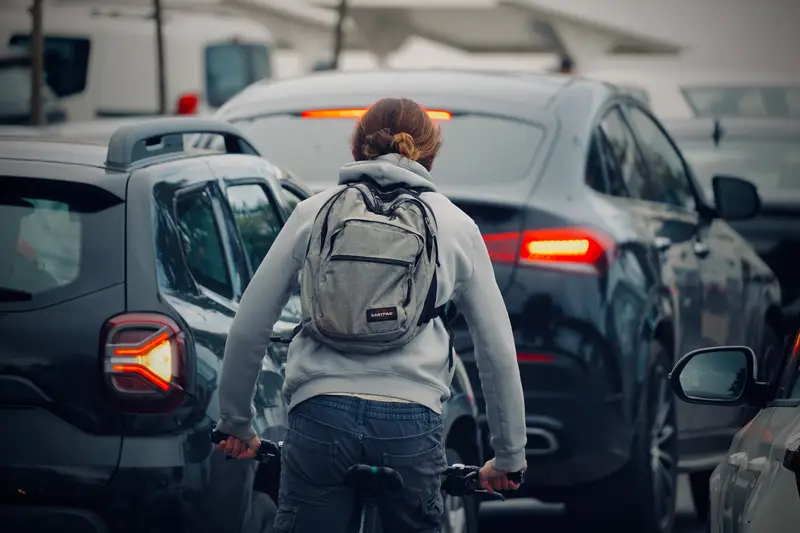
This is the strongest case there is, for a reason that has nothing to do with money: you arrive not sweating. That is the thing that makes commuting by bike work at all, and it is why people who tried an ordinary bicycle and gave up stick with an e-bike.
In congested cities the door-to-door time is often better than driving, because you are not parking. Range is essentially never the constraint: 45 to 110 km real-world covers a typical commute several times over, and most people charge weekly rather than nightly.
The costs that vanish are the ones people forget to count. Parking. Fuel for short cold-engine trips, which is where cars are least efficient. The gym membership that existed to undo the sitting. Our commuter guide covers what to look for if that is the use case.
Ebike pros and cons without the sales pitch

**For:** you ride more. That is the finding that actually matters, and it holds across every study and every shop inbox. Hills stop being a factor in whether you go. Riders coming back after injury, or after twenty years off, get a bike that works with what their body currently does rather than what it did. Running costs are close to nothing. And you skip traffic rather than sit in it.
**Against:** the upfront cost is real, most bikes weigh 22 to 30 kg and cargo bikes 30 to 40 kg, which matters enormously if it lives upstairs. Batteries are consumable and eventually need replacing. Secure storage is a genuine requirement rather than a nice-to-have. And it is a slower way to cover 60 km than a car, obviously.
The dishonest version of this list leaves off weight and storage. Those two account for most of the bikes that end up unused, more than price does.
Is an electric bike worth the money if you keep the car?
Yes, but the case changes shape, and it is worth being clear-eyed about it.
If the car stays, you keep paying the fixed costs: insurance, registration, depreciation, the parking space. The bike then only saves the variable costs of the trips it replaces, which is the fuel and the wear, not the ownership. That is a smaller number.
Where it still stacks up is on second cars specifically. A second car is almost entirely fixed cost for a small number of short trips, which is precisely the pattern an e-bike replaces best. That was my situation in 2019, and it is the clearest version of this decision I know.
If you are keeping one car and adding a bike, judge it on the time, the parking and the fact that you will ride more. Those are real. Just do not expect it to pay for itself the way replacing a vehicle does.
Who should not buy an ebike

**If your regular trip is flat and under about 5 km and you already ride comfortably.** A normal bicycle is lighter, cheaper, needs no charging and no winter battery storage. You would be paying for a motor to solve a problem you do not have.
**If there is nowhere secure to keep it.** This ends more e-bike ownership than any other factor. A bike locked to railings overnight in a city is a bike on a delay.
**If it has to go up several flights.** 22 to 30 kg twice a day stops being tolerable in about a fortnight, whatever you tell yourself in the shop.
**If the budget only reaches the very bottom of the market.** Below roughly $800 you are usually buying uncertified cells and no spare parts. Waiting and saving is a better plan than buying twice.
Nine out of ten times, though, the honest blocker is storage rather than money, and it is worth answering that question before the buying one. If you have somewhere safe to put it and trips it can genuinely replace, the rest of this is arithmetic and the arithmetic is fine.
Straight answers

Are ebikes worth it?
It depends almost entirely on how many car trips the bike actually replaces. Replace four or five short journeys a week and it pays for itself in running costs, at roughly $0.10 per 100 km against $8 to $15 by car. Replace none and it is an expensive way to get exercise.
Do ebikes save money?
On running costs, substantially. Charging a 500 Wh pack costs about $0.12 to $0.20, which is around $0.10 per 100 km ridden against $8 to $15 by car, before parking and servicing. Whether the purchase pays back depends on how many car trips you genuinely displace.
Are ebikes worth it for commuting?
This is the strongest case, largely because you arrive without sweating, which is what stops most people commuting on an ordinary bike. In congested cities door-to-door time often beats driving since there is no parking, and real-world range of 45 to 110 km covers a typical commute several times over.
What are the main ebike pros and cons?
For: you ride more, hills stop mattering, running costs are close to nothing, and it works for riders returning after injury or a long gap. Against: real upfront cost, 22 to 30 kg of weight, a battery that is eventually consumable, and a genuine need for secure storage.
Is an electric bike worth the money if I keep my car?
Yes, but the savings shrink, because you keep paying insurance, registration and depreciation regardless. The bike then only saves the variable cost of trips it replaces. The case is strongest against a second car, which is mostly fixed cost serving a handful of short journeys.
Who should not buy an ebike?
Anyone whose regular ride is flat and under about 5 km who already cycles comfortably, anyone without secure storage, anyone who must carry it up several flights daily, and anyone whose budget only reaches the very bottom of the market where cells are uncertified and spares do not exist.
How long before an ebike pays for itself?
It depends on trips replaced rather than time. Displacing a daily car commute makes the running-cost savings add up quickly; displacing a couple of weekend trips means it may never pay back in cash, though it may still be worth it for the time and the riding.
Do ebikes actually make you fitter?
Generally yes, because people ride them far more often and much further than they rode an ordinary bike. The assistance lowers the effort per kilometre but raises total kilometres, and riders on hilly routes use them notably more than they used a regular bicycle.
Marcus Hale
Sold his second car in 2019 and has not looked back, 44. Tracks every cent a bike saves him in a spreadsheet that annoys everyone who has been shown it, which is most people.
Keep reading
Browse the range
Still not sure which one? Give us a shout.