
Dave Whitmore · Australia · 10 min read
Electric Bike With Training Wheels? Not Really
Published 2026-09-06
TL;DR
An electric bike with training wheels is rarely the fix people expect. Most aftermarket stabilisers are rated for a standard bicycle, not the 22 to 40 kg an e-bike actually weighs, and they get worse as speed builds rather than better. If the problem is confidence, a slow car-park session on a low, stable frame beats a bolt-on part. If the problem is genuine balance, an electric trike solves it properly instead of working around it. We will tell you which one you actually need, honestly, even if it is the cheaper answer.
An electric bike with training wheels is the internet's favourite fix for a problem that is usually not the one people think they have. (Spoiler: it is rarely the two wheels doing the letting-down.) Training wheels barely survive a normal bicycle. Add a battery, a motor, and the 22 to 40 kilograms an e-bike actually weighs, and the maths gets worse, not better.
So here is the honest version: what training wheels can and cannot do on an e-bike, who they were never built for, and the two answers that actually work — one costs nothing and one is a different bike entirely.
Electric bike with training wheels: does it actually work?

Sometimes, briefly, at walking pace, on flat concrete, and that is the entire envelope. Most stabiliser wheels sold for adult bikes are rated around what a standard bicycle weighs, not the 22 to 30 kg of a typical e-bike or the 30 to 40 kg of a cargo one. Bolting a part built for a much lighter bike onto the heavier one is asking it to do a job it was never specified for, which is the exact energy of using a bent paperclip to hold a garden gate shut.
The failure mode is not dramatic, it is just early. The brackets flex, the wheels lift on the first camber or pothole, and the rider gets confidence at the one speed and surface where it was never actually in question, and none anywhere else. That is the gap the marketing skips.
They still sell well, and the reason is not mysterious: the box promises exactly what a nervous buyer wants to hear, and bolting on a small part feels far less embarrassing than admitting the bike itself might be the wrong shape for the job. It rarely is the bike. It is almost always the fix.
There is a second problem nobody selling the kit mentions: an e-bike's own motor changes how it behaves at low speed, which is the next section, because it decides more of this than the stabiliser does.
Can you put training wheels on an electric bike?
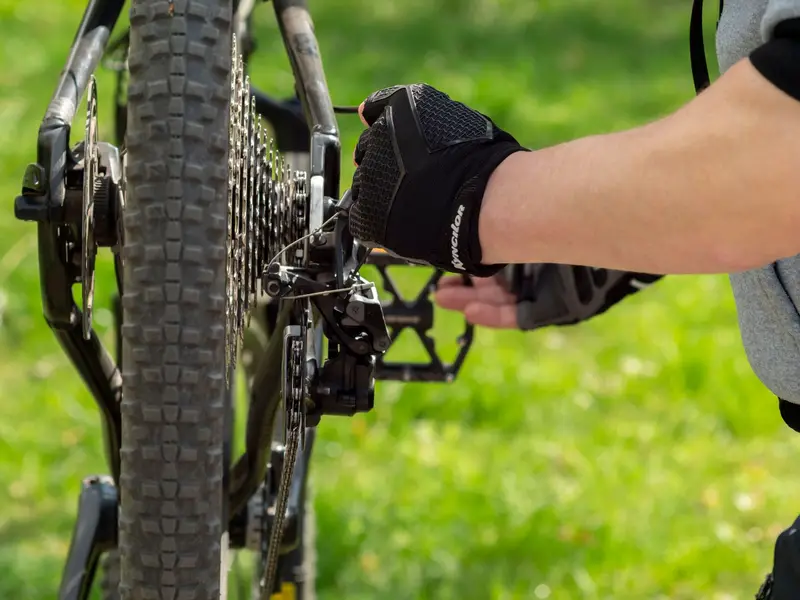
Mechanically, on some models, yes. Practically, check three things before you spend a cent: rear axle compatibility (most stabiliser kits clamp to a standard quick-release axle, and a hub-motor wheel often is not one), brake and chainstay clearance, and the kit's own stated weight limit against your actual bike weight plus your own.
Even when it physically fits, it changes the bike in ways a normal bicycle does not have to deal with. A torque sensor reads pedal force and delivers power smoothly with the pedal stroke; a cheaper cadence sensor just detects that the pedals are turning and can deliver a small surge the moment they do, which is a strange thing to discover for the first time while balanced on two extra wheels bolted to the axle. Torque sensor vs cadence sensor goes through why that matters more than most spec sheets let on.
Fitment is the other quiet obstacle. A hub motor runs a cable out of the same axle a stabiliser bracket wants to clamp to, and the two do not always share the space politely. Cadence or torque sensor, hub motor or mid-drive, check the exact model before ordering a kit rather than after it arrives and does not fit.
(If the kit is already sitting in a box on your hallway floor, no judgement. Read on anyway, and return it if the next two sections change your mind.)
Are training wheels safe on an ebike?
At walking pace, on a flat, dry, empty surface, with the assist on its lowest setting: reasonably. Outside that box, no, and the box is smaller than it sounds.
Stabilisers are a two-point contact designed for a bike travelling in a straight line at low speed. They do nothing useful in a turn, they do nothing at all once the bike leans, and an e-bike encourages more speed sooner than a rider expects, because that is the one thing the motor is actually for. The two facts do not sit well together.
The everyday surfaces most rides actually cross make this worse, not better. A driveway camber, a gravel verge, the lip where a footpath meets a road: ordinary bicycles handle these by leaning slightly through them, which is the one motion a stabiliser exists to prevent. Practising exclusively on a flat, dry car park does not prepare anyone for the ordinary route home.
**The honest opinion here is a plain one: twenty minutes on the actual bike beats twenty reviews of an aftermarket part.** The internet's favourite fix might be the wrong one for your specific balance issue, your specific bike, or your specific hill, and a forum thread cannot test that for you. If you are not sure after a slow lap of a car park, our return window is 14 days, ride it and see, precisely for this kind of decision.
Do adults need training wheels on a bike?

Rarely the wheels themselves. Usually one of three things: never having learned as a kid, coming back after years off a bike, or a balance concern serious enough that the wobble is the actual worry rather than the confidence.
I spent years thinking e-bikes were cheating, until a knee injury put me on one anyway. The wobbliest I have ever felt on two wheels was not on a race track, it was in the first fortnight after that, starting and stopping at walking pace exactly the way this article keeps describing. What fixed it was not a bolt-on part. It was a fortnight of short, boring, low-speed laps on a bike that was already the right shape for the job, until the wobble stopped being the story.
The first two are learning problems, and the fix is practice on the right bike, not a bolt-on part. How to ride an ebike has the car-park drill we teach first-timers, and it does not involve stabilisers once.
The third is different, and it is worth being straight about it rather than selling a workaround: if your balance issue holds at a standstill and while stopping and starting, not just while moving, that is not a confidence problem a few sessions will fix. That is a three-wheel problem, and there is a real bike for that, covered two sections down.
There is decent evidence for the practice route working, for what it is worth: research on physical activity, balance and bicycling in older adults found cycling correlated with better balance outcomes than several other common forms of exercise, and one in four adults over 65 report a fall every year according to the CDC's older-adult falls data. Riding is part of the fix, not the risk, for most people in that position. It is choosing the wrong bike, or the wrong prop, that turns it into one.
Electric trike vs training wheels
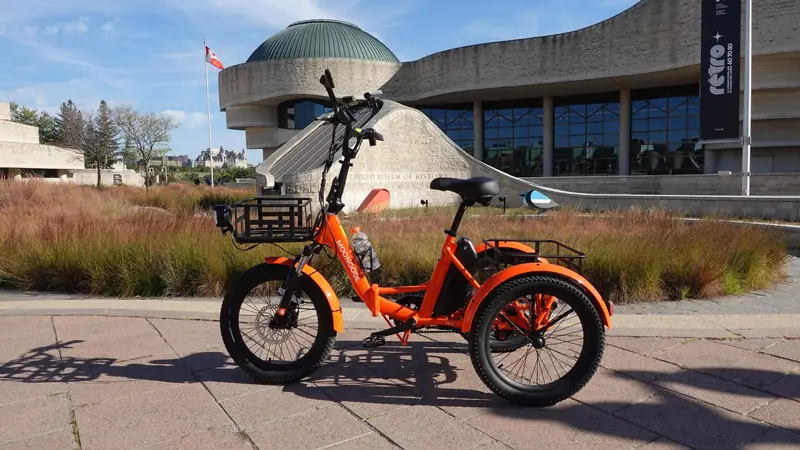
A trike solves the actual problem. Training wheels are a workaround bolted onto a bike designed to lean; a trike is a different bike, designed from the frame up to never need to. Nothing to bolt on, nothing rated for the wrong weight, and no learning curve for stopping and starting, which is where most stabiliser setups fail first anyway.
It also removes the one job a kickstand was never built for. A loaded two-wheeler on a stabiliser kit still has to balance itself while parked, on a stand rated for a much lighter bike; a trike simply stands there, at any load, on any slope shallow enough to ride in the first place.
We carry 13 electric trikes, from $1,199 to $2,899, which is often less than a decent two-wheeler once you have priced a stabiliser kit, a torque arm to stop it twisting loose under motor power, and the inevitable second attempt after the first kit turns out to be the wrong one. Our electric trike range is worth a proper look before spending money solving the same problem twice.
This is also the one place Challenged Athletes Foundation's adaptive cycling resources are worth a read if balance is a longer-term issue rather than a first-weeks thing: a trike is one point on a much wider range of genuinely adaptive cycling equipment, and it is worth knowing what else exists before assuming ours is the only shape available.
Best ebike for someone with balance problems

If the issue is confidence rather than genuine balance, a step-through frame is the better starting point, not a two-wheeler with an aftermarket part clamped to it. Low step-over height, a lower centre of gravity, and nothing to swing a leg over while wobbling. The Specialized Turbo Como 4.0 is built exactly this way, and it is where we point most nervous first-timers before anyone mentions stabilisers.
If the issue is a genuine, standstill-included balance concern, buy the trike. Not as a last resort after the training wheels have already failed twice, as the first and cheapest correct answer. Nine times out of ten the person asking about training wheels has never actually sat on the three-wheeled option, and it costs nothing to find out it was the right one all along.
Test both if you are unsure which shape fits. A short, slow lap tells you more in five minutes than a week of reading reviews of an aftermarket part neither of us can test on your driveway, your knees, or your actual hill.
Every bike we send out is workshop-checked before it ships rather than drop-shipped from a warehouse that has never seen it, whichever of the two you land on. If you are still unsure which shape is right, give us a shout and tell us what the actual problem is; we would rather talk you into the cheaper, correct bike than sell you a part that solves nothing.
Straight answers

Can you put training wheels on an electric bike?
On some models, mechanically, yes, if the rear axle, brake clearance and the kit's weight rating all check out against the bike's actual weight. Whether it is a good idea is a separate question: most kits are rated for a standard bicycle, not the 22 to 40 kg an e-bike typically weighs.
Are training wheels safe on an ebike?
Only at walking pace, on flat, dry ground, with the lowest assist level selected. They do nothing useful in a turn or once the bike leans, and an e-bike's motor makes reaching a speed past that safe window easier than it is on a normal bicycle.
Do adults need training wheels on a bike?
Rarely the wheels themselves. Most adults asking this are relearning or returning after years off a bike, which practice on a low, stable frame fixes faster than a bolt-on part. A genuine standstill balance issue is a different problem, and the honest fix there is a trike, not a stabiliser.
Electric trike vs training wheels: which one actually helps?
The trike, for anyone with a real balance concern rather than first-weeks nerves. Training wheels are a workaround bolted to a bike built to lean; a trike is built not to need that in the first place, and it starts from about the same price as a stabiliser kit plus the torque arm most installers add anyway.
What is the best ebike for someone with balance problems?
A step-through comfort frame for confidence issues, since the low step-over and lower centre of gravity remove the part that actually worries most nervous riders. For a genuine standstill balance concern, an electric trike is the correct bike, not a two-wheeler with an aftermarket fix.
Should training wheels touch the ground when the bike is upright?
Just barely, with a few millimetres of clearance so the bike can lean slightly before they take the load. Set flush to the ground, they fight the rider's every small correction instead of catching the big ones, which is more often what makes a stabilised bike feel wrong rather than helpful.
How much does a training wheel kit for an ebike cost?
Less than you would think once an installer adds the torque arm most hub-motor bikes need to stop the extra load twisting the axle loose. A properly built electric trike starts at $1,199 in our own range, which is worth pricing against the kit plus fitting before assuming the kit is the cheap option.
Dave Whitmore
Ex-mountain-bike racer, 47, came to e-bikes cranky after a knee injury and converted inside a week. Has talked more than one nervous first-timer out of a bad idea and into a test ride instead.
Keep reading
Browse the range
Still not sure which one? Give us a shout.