
Owen Fraser · Canada · 10 min read
Can You Ride an eBike in the Rain? Yes
Published 2026-09-04
TL;DR
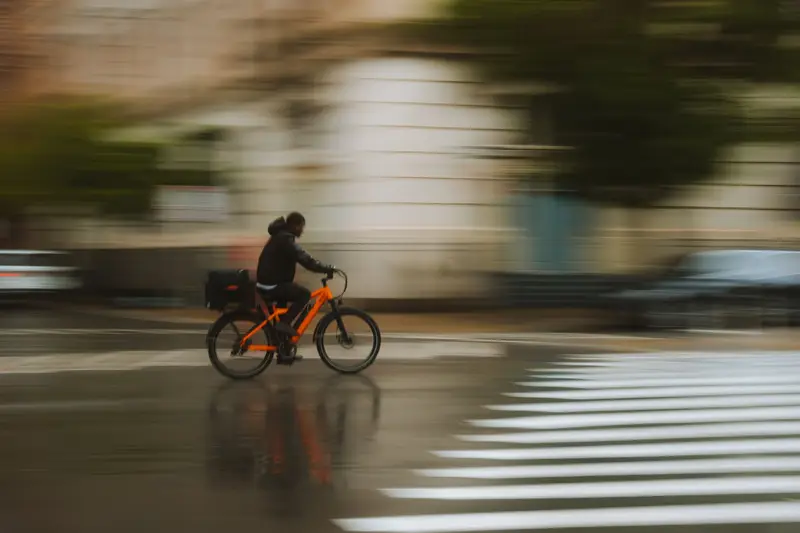
Yes, you can ride an ebike in the rain. Practically every e-bike sold is water-resistant, not waterproof, which means rain is fine and submersion is not. Check the IP rating: IPX5 handles sustained rain, IP67 will survive being briefly dunked. What actually goes wrong is rarely the motor. It's the chain, the brake pads, and the battery connectors you plugged in while still wet. Rinse the drivetrain, dry the connectors before charging, and don't leave it outside overnight. And if it's salted winter road rather than clean rain, that's a different problem entirely, covered below.
Every winter, somebody emails us convinced they've killed their e-bike in the rain. Nine times out of ten the bike is completely fine and the chain is a rust sculpture, because they rode through four months of salted road and never once pointed a hose at it.
So: can you ride an ebike in the rain? Yes. Almost all of them are built for it. The useful question is what wet weather actually damages, which turns out to be a short and slightly boring list, and none of it is the part everyone worries about.
Yes, and there's one number worth checking first
Are ebikes waterproof? No, and no manufacturer claims they are. They're water-resistant, which is a different promise: designed to shrug off rain and road spray, not to be submerged. The distinction matters the moment you meet a flooded underpass.
The ebike IP rating tells you where the line sits. It's an international standard, IEC 60529, and the second digit is the water one. IPX4 means splashing from any direction. IPX5 means a sustained low-pressure jet, which in practice is heavy rain and road spray. IP67 means dust-tight and survives brief immersion. The X just means the dust rating wasn't tested, not that it's missing.
Real numbers from our own range rather than a generic table: the Aventon Sinch 2.5 at $1,799 is rated IPX5, which covers any rain you'd voluntarily ride in. The Aventon Ramblas at $2,899 goes further, with an IP67-rated motor and IPX6 elsewhere, because a trail bike gets creek crossings as well as weather.
If a listing doesn't state an IP rating anywhere, that's information too. The brands who tested for it tend to publish it. (The ones who didn't test tend to publish a photograph of a bike in the rain instead, which is not the same thing.)
What water actually breaks, in order
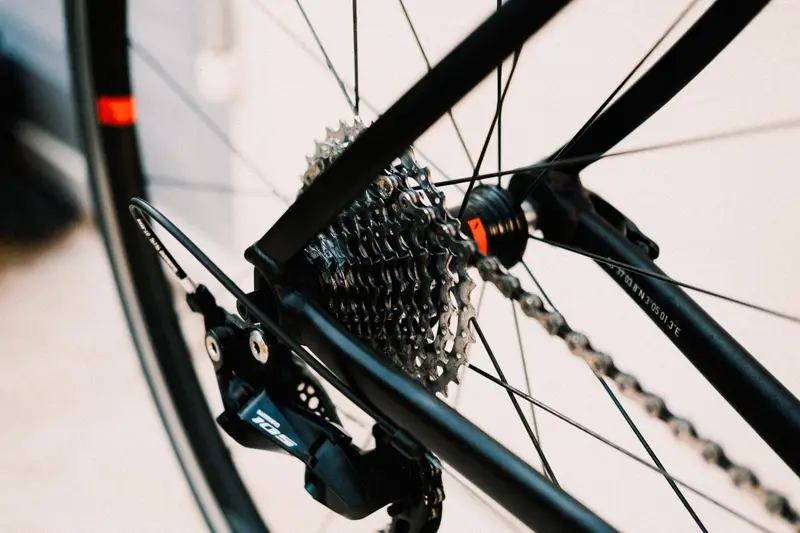
Everyone worries about the motor. The motor is a sealed unit and is almost never the casualty. Here's the honest running order of what wet weather goes after, from most to least common, and it's mostly unglamorous mechanical parts.
First, the drivetrain. A wet chain sheds its lubricant and starts flash-rusting within a day, and a rusted chain grinds the cassette down with it. This is the single most common form of ebike rain damage and it's entirely preventable with a rag and thirty seconds of chain lube. If you ride wet often, a belt drive removes the problem completely, since there's no chain to rust.
Second, brake pads. Wet grit acts as grinding paste, and pads that would last a year of dry riding can disappear in a wet season. Check them more often than you think you need to.
Third, and this is the one that actually kills electronics: charging a wet battery. Water sitting in the charge port when you plug in can short the contacts. Dry the connector properly before it touches a charger, every time, no exceptions. That one habit prevents more expensive damage than everything else on this list combined.
Fourth, bearings and the headset, slowly, over seasons rather than rides. That's a service-interval problem, not a today problem.
Wet roads change your braking more than they change your bike
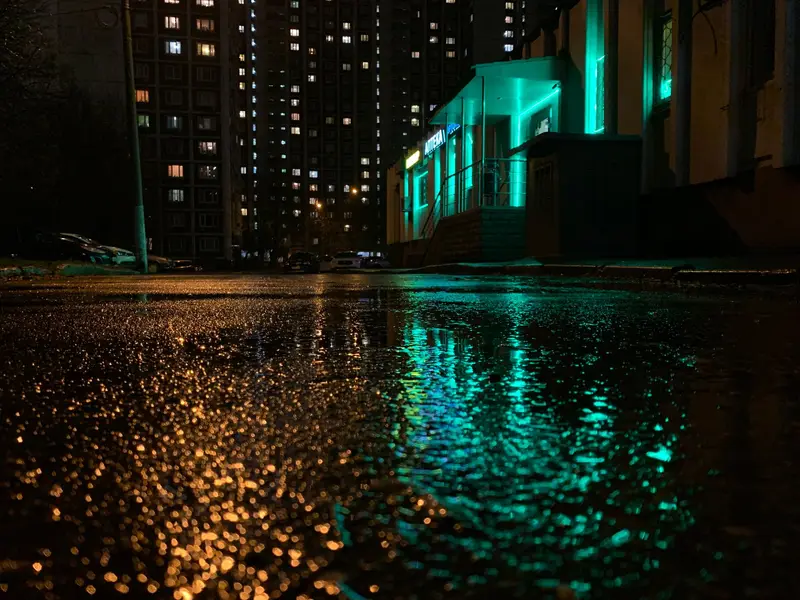
Riding an ebike in wet weather is more about the road than the bike. Grip drops, and it drops most on the surfaces that already had none: painted lines, metal drain covers, tram rails, wet leaves, and the polished strip in the middle of an old bike lane. Cross metal and paint upright, never mid-lean.
Braking distance stretches twice over. Discs need a rotation or so to wipe the water off the rotor before they bite properly, so the first squeeze does less than you expect. Then the tyre has less grip to work with once they do bite. Brake earlier, squeeze progressively, and if you're newer to this, our riding guide covers the technique in more detail.
Be seen, because drivers see less in rain than you do. Lights on, even at midday. A rear light in daylight is the cheapest safety upgrade there is, and most of what you need lives in our accessories range. General wet-weather road positioning applies to e-bikes exactly as it does to bicycles, and the US National Highway Traffic Safety Administration guidance is a reasonable baseline wherever you ride.
Drop your tyre pressure a little, too. A few PSI below your dry-weather number puts more rubber on the road and takes the edge off a slippery corner.
Salt is the real killer, not rain

I ride through Canadian winters, and the lesson that took me longest to learn is that cold doesn't end e-bikes. Salt does. Clean rain is basically a wash cycle. Salted slush is a corrosive bath that gets into the chain, the cassette, the brake hardware and every connector it can reach, and it keeps working long after the bike is dry.
The fix is embarrassingly simple: rinse the drivetrain with plain water after a salted ride, dry it, and re-lube. Not a deep clean, not every time. A rinse. That single habit is the difference between a drivetrain lasting years and lasting one winter. Studded tyres handle the ice half, but nothing except water handles the salt half.
The battery deserves its own rule, and this is the opinion I'll die on: battery care is 80% of battery life. Don't store it fully empty, don't store it fully full, and don't leave it outside in the cold. Bring it indoors, keep it between 20% and 80% for long storage, and a pack will give you its full 800 to 1,000 charge cycles, three to five years of normal use. Abuse it and it'll quietly give you a fraction of that while you blame the weather.
The five-minute dry-down that prevents most of it
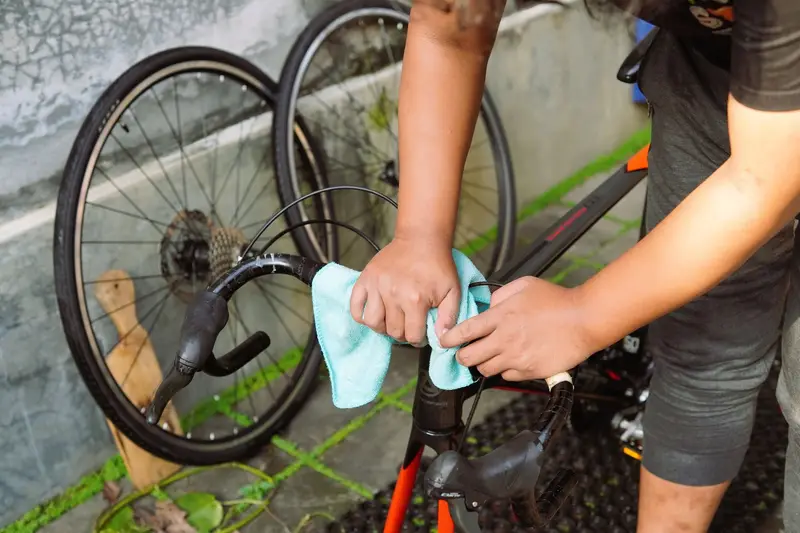
Get home wet, do this, go inside. It takes about as long as taking your jacket off.
Wipe the chain with a rag and re-lube it. Wipe the frame and the display. Open the charge port, dry the contacts, and leave the battery to reach room temperature before you plug anything in. Then park it somewhere it can dry rather than somewhere it stays damp, which usually means indoors rather than a shed that breathes badly.
Never use a pressure washer. It's the one genuinely destructive thing people do to e-bikes with good intentions. High-pressure water drives straight past the seals that rain never troubles, into bearings and connectors, and turns a water-resistant bike into a wet one. A bucket, a hose on low, or a damp cloth. That's it.
Can you leave an ebike in the rain overnight? You can, and I wouldn't. Rated for rain means rated for riding in it, not for standing in it for nine hours while water finds every seam and the temperature drops. If it genuinely has to live outside, get a cover and take the battery indoors.
When to leave it at home

Standing water is the actual line. If a puddle is deep enough to reach the motor or the battery, don't ride through it, go around, and if you can't tell how deep it is, treat it as too deep. Submersion is the one thing water resistance genuinely does not cover, and it's also the one that ends in a repair bill rather than a rusty chain.
Skip it in an electrical storm, in a flood, and on the first freeze of the season when yesterday's rain has turned into black ice you can't see. None of that is e-bike-specific advice. It's just that a 25 kg bike is harder to save once it starts sliding than a 11 kg one.
And if your riding is genuinely all-weather, all-winter, on salted roads, be honest about it when you buy. A belt drive, hydraulic discs, full mudguards and a higher IP rating are worth real money in that use case and close to nothing if you're a fair-weather rider. Buying winter-proofing you'll never use is the same mistake as buying range you'll never empty. We'd rather talk you into the cheaper bike.
Straight answers

Are ebikes waterproof?
No. They are water-resistant, which means built to handle rain and road spray but not submersion. The IP rating tells you how far that goes: IPX4 covers splashes, IPX5 covers sustained rain, IP67 survives brief immersion. No mainstream manufacturer claims a fully waterproof e-bike.
What IP rating do I need to ride an ebike in the rain?
IPX4 is enough for light rain and IPX5 or higher covers sustained rain and road spray comfortably. In our range the Aventon Sinch 2.5 is IPX5 and the Aventon Ramblas has an IP67-rated motor with IPX6 elsewhere. If a listing states no IP rating at all, take that as an answer in itself.
Can you leave an ebike in the rain overnight?
You can, but don't make a habit of it. Rated for rain means rated for riding in it, not standing in it for hours while water works into every seam. If it has to live outside, use a cover and bring the battery indoors, especially in the cold.
Can water damage an electric bike?
Rain rarely damages the motor, which is sealed. What water actually ruins is the chain and cassette through rust, brake pads through wet grit, and occasionally the electronics if you plug in a charger while the battery connector is still wet. Dry the connector before charging and most ebike rain damage never happens.
Can I hose down or pressure wash my ebike?
A hose on low pressure or a bucket and cloth is fine. A pressure washer is not. High-pressure water pushes past seals that ordinary rain never troubles, into bearings and connectors, which is how a water-resistant bike becomes a wet one internally.
Is riding an ebike in the rain dangerous?
No more than riding any bicycle in the rain, provided you adjust. Grip drops on paint, metal covers and wet leaves; braking distance stretches because discs need a rotation to clear water before biting. Brake earlier, cross metal upright, drop a few PSI of tyre pressure, and run lights even in daylight.
Is salt worse for an ebike than rain?
Considerably. Clean rain is close to a wash cycle. Salted winter slush is corrosive and keeps attacking the drivetrain, brake hardware and connectors after the bike has dried. Rinsing with plain water after a salted ride is the single highest-value maintenance habit for year-round riders.
Do I need mudguards for wet-weather riding?
For commuting, yes. They keep road spray off you, your drivetrain and your brakes, which is comfort and maintenance in one part. Full-length guards do far more than the short clip-on kind, and most commuter-focused bikes either include them or have the mounts ready.
Owen Fraser
Rides through Canadian winters that end most bikes, 31, and has replaced enough salt-eaten drivetrains to have strong opinions about rinsing. Believes almost every weather problem is really a storage problem.
Keep reading
Browse the range
Still not sure which one? Give us a shout.