
Sanne de Vries · Netherlands · 10 min read
Types of Electric Bikes: Which One Fits You
Published 2026-09-05
TL;DR
There are roughly seven types of electric bike worth knowing: commuter, folding, cargo, eMTB, fat tyre, gravel and step-through comfort. Most people buying their first one should get a commuter, and most people shopping for one talk themselves into something more exciting. The type decides what the bike is good at far more than the spec sheet does. Price bands run from $799 for folding up to $19,300 at the top of off-road. And type is not the same thing as class, which is a legal category and a completely separate question.
In the Netherlands nobody asks what type of bike you have. You have a bike. It carries children, shopping, a Christmas tree once, and it is simply the bike.
Everywhere else the category matters, because you are probably buying one bike to do one job well rather than four bikes to do four. So here are the types of electric bikes that genuinely exist, what each is actually for, and which one you most likely want. (Spoiler: it is the least interesting one on the list.)
What are the different types of electric bikes?
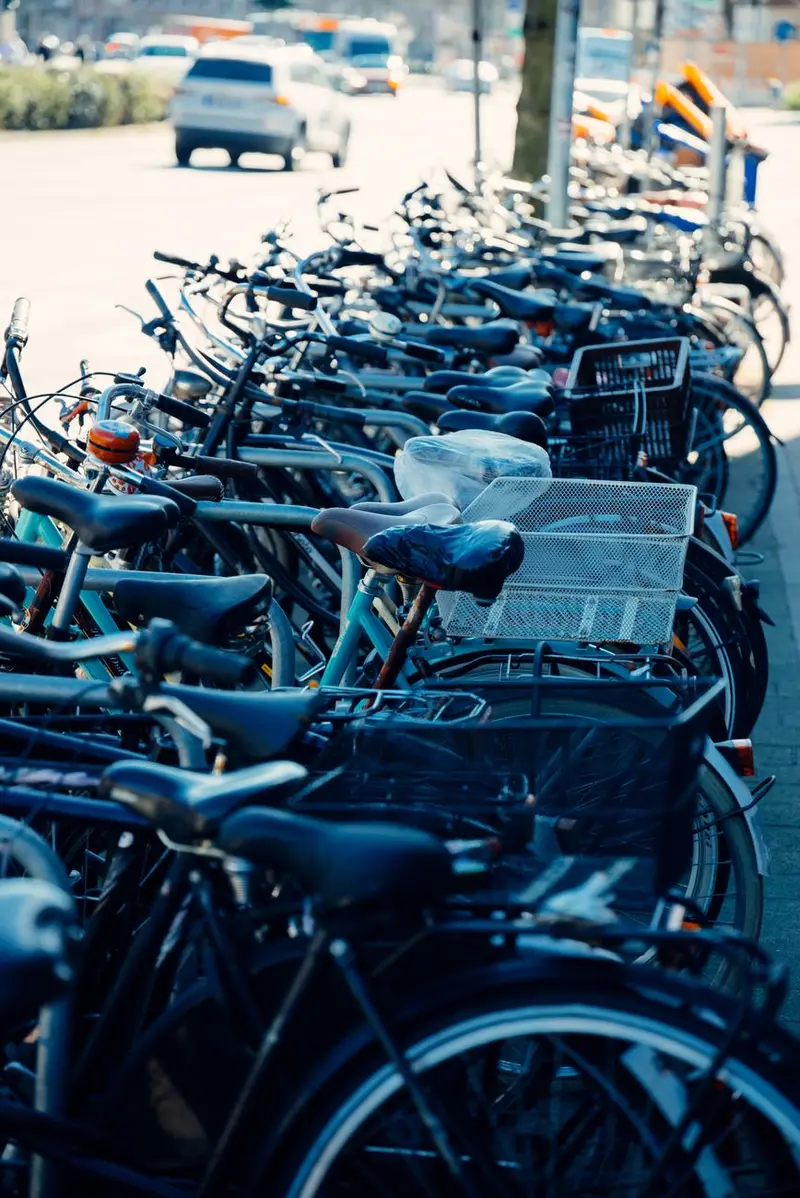
Seven categories cover almost everything sold, and the honest way to read this list is by what the bike is for rather than what it looks like.
**Commuter or city.** Upright riding position, medium tyres, usually with lights, mudguards and a rack already fitted. The default, and the one most people should buy. $1,199 to $18,700 across our city range.
**Folding.** Hinges in the middle, 20-inch wheels, packs to roughly suitcase size. For flat-dwellers, boats, campervans and anyone combining a bike with a train. The cheapest way in at $799 to $1,899 in folding.
**Cargo.** Longtails and front-loaders built to carry children, shopping and things a normal rack would refuse. Heavier, longer, and genuinely car-replacing. $1,999 to $7,999 in cargo.
**eMTB.** Suspension, grippy tyres, usually a mid-drive because trails need gears. $1,999 to $11,990 in eMTB.
**Fat tyre.** Very wide tyres for sand, snow and soft ground. Fun, heavy, slower on tarmac. $1,899 to $1,999 in fat tyre.
**Gravel and adventure.** Drop bars, lighter frames, smaller motors, built for long days on mixed surfaces. $2,199 to $8,295 in gravel.
**Step-through and comfort.** No crossbar to swing a leg over, upright position, easy to get on and off. $1,199 upwards in comfort. There is also a utility category, throttle-equipped load carriers at $1,499 to $2,299, which sits between commuter and cargo.
Which type of electric bike is best for commuting?

A commuter, and I realise that sounds circular. But the reason matters: a commuter bike is the only category designed around the things that make a daily ride survivable rather than fun. Mudguards so you arrive dry. A rack so the weight is on the bike and not your back. Lights already wired in, so there is nothing to charge separately or forget.
People routinely buy an eMTB or a fat tyre bike for a road commute because those look like more bike for the money. They are more bike. They are also heavier, slower on tarmac, and missing every practical fitting, so you then spend another few hundred adding the mudguards and rack that a commuter came with.
Real-world range across our range runs 45 to 110 km on a charge, which covers essentially any commute twice over. Range is almost never the constraint people expect it to be. If you want the fuller version of this argument, our commuter guide goes deeper.
The difference between a cargo and a commuter ebike

This is the pair people confuse most, usually because a commuter with a rack looks like it could do cargo work. It cannot, and the difference between cargo and commuter ebike designs is structural rather than cosmetic.
A cargo bike is built around the load. Longer wheelbase, reinforced frame, a rack rated for real weight, and geometry that stays stable when the back end is heavy. A commuter's rack is rated for a pannier and a laptop, and loading it like a cargo bike makes the steering vague in a way you notice at the first roundabout.
Weight tells the story: most bikes in our range are 22 to 30 kg, cargo bikes 30 to 40 kg. That extra mass is frame and rack doing a job. It is also why a cargo bike is harder to get up a flight of stairs, which is the practical trade nobody mentions.
I do the school run, the groceries and the weekend haul on a cargo bike and treat owning a car as a strange special occasion. For most short trips it is not a compromise on the car, it is simply faster, and you never circle looking for parking. But it is the wrong bike for a 10 km commute with nothing to carry.
What type of ebike is best for beginners?
A step-through commuter, nine times out of ten. Not because beginners need something easier to ride, but because a step-through frame lets you put both feet down without swinging a leg over 25 kg of bike, and that is where almost every first-week wobble happens.
The second reason is boring and more important: a commuter has the fittings already. A first bike that needs three accessory purchases before it is usable is a bike that sits in a hallway.
Here is my one strong opinion, and it will not make me popular: most 'best electric bike 2026' lists are affiliate rankings, not advice. They cannot size you, they do not know your hill, they have never seen your stairs, and they will never tell you not to buy. That last part is the whole job. If a list has no entry that says 'not for you', it is a shop window with a headline.
Electric bike types are not the same as ebike classes
Worth separating, because the two words get used interchangeably and they answer completely different questions.
**Type** is what the bike is for: cargo, folding, commuter. It is a design decision and nobody regulates it. **Class** is a legal category describing how much the motor may help and whether a throttle is allowed. In the US that is Class 1, 2 and 3; the EU caps assist at 25 km/h and mostly omits throttles; other markets differ again.
So a cargo bike can be Class 1 or Class 2, and a folding bike can be either. Electric bike types tell you what it does, classes tell you where you may legally ride it. PeopleForBikes tracks the US position state by state, and our classes explainer covers what each one permits.
When none of these is the right answer

If your trips are short, flat, and you are already comfortable on a normal bike, you may not need an electric one at all. A regular bicycle is lighter, cheaper, needs no charging, and will not ask you to think about battery storage over winter. We would rather say that than sell you something that becomes furniture.
The other honest no is storage. If the bike has to live up three flights with no lift, the type barely matters and the weight does. 22 to 30 kg is fine to ride and genuinely awkward to carry twice a day. Folding models start at $799 and are the realistic answer there, not the cargo bike you liked the look of.
And if you are choosing between categories rather than models, start from the trip rather than the bike. Our guide to choosing an ebike works through that properly, and it is the right end to start from.
Straight answers

What are the different types of electric bikes?
Seven cover almost everything sold: commuter or city, folding, cargo, electric mountain (eMTB), fat tyre, gravel and adventure, and step-through comfort. Some retailers also list utility bikes, which are throttle-equipped load carriers sitting between commuter and cargo. The type describes what the bike is built for, not how powerful it is.
Which type of electric bike is best for commuting?
A commuter or city bike. It is the only category designed around daily practicality: mudguards, a rack and integrated lights come fitted rather than bought separately. eMTBs and fat tyre bikes look like better value but are heavier, slower on tarmac and missing every useful fitting.
What is the difference between a cargo and a commuter ebike?
A cargo bike is built around the load, with a longer wheelbase, a reinforced frame and a rack rated for real weight. A commuter's rack is rated for a pannier. Cargo bikes weigh 30 to 40 kg against 22 to 30 kg for most others, and that difference is structure doing a job.
What type of ebike is best for beginners?
A step-through commuter. The low frame lets you put both feet down without swinging a leg over a heavy bike, which is where most first-week wobbles happen, and the commuter fittings mean it is usable the day it arrives rather than after three accessory purchases.
Are electric bike types the same as ebike classes?
No, and they answer different questions. Type is what the bike is designed for and nobody regulates it. Class is a legal category covering how much the motor may assist and whether a throttle is permitted, and it varies by country. A cargo bike can be any class.
How much do the different types of electric bikes cost?
Folding is the cheapest way in at $799 to $1,899. City and commuter run $1,199 to $18,700, utility $1,499 to $2,299, fat tyre $1,899 to $1,999, cargo $1,999 to $7,999, eMTB $1,999 to $11,990, gravel $2,199 to $8,295, and off-road tops out around $19,300.
Which type of electric bike is lightest?
Gravel and adventure bikes, which use lighter frames and smaller motors, followed by folding bikes. Most e-bikes land between 22 and 30 kg, and cargo bikes 30 to 40 kg. If you need to carry the bike regularly, weight should outrank almost every other consideration.
Can one electric bike do everything?
Not well. A commuter with a rack handles light shopping, and a cargo bike can commute, but each is compromised outside its purpose. Buy for the trip you take most often, then accept the bike will be mediocre at the trips you take rarely. That is cheaper than owning two.
Sanne de Vries
Grew up doing everything by bike, 29, and treats owning a car like a strange special occasion. Does the school run, the groceries and the weekend haul on a cargo bike, and has opinions about panniers.
Keep reading
Browse the range
Still not sure which one? Give us a shout.