
Sanne de Vries · Netherlands · 10 min read
Dog E-Bike: Basket, Trailer or Neither
Published 2026-09-10
TL;DR
Short version: a dog e-bike isn't a special bike, it's your regular e-bike plus a basket, a trailer, or a lead and some patience. Our own cargo range rates rear racks from 176 lb to 300 lb, so most dogs fit on equipment that costs under $300 rather than a dedicated pet trailer we don't stock. Puppies, seniors, short-nosed breeds and genuinely anxious dogs are the exceptions — a slow walk beats a fast basket for those. Work out the dog's weight and temperament first, then pick the setup, not the other way round.
A dog e-bike, strictly speaking, doesn't exist. Nobody builds a bicycle specifically for a Labrador. What people usually mean by "electric bike for dogs" is one of three setups bolted onto a completely normal e-bike: a basket for a small dog, a trailer for a big one, or a lead and a very patient first attempt. All three work. Only one of them is free.
Here's the direct answer: yes, you can ride an e-bike with a dog, and no, you don't need anything special to start. What you actually need depends on the dog — its weight, its temperament around a moving bike, and whether it's riding in a basket, riding in a trailer, or running alongside on legs it was born to use. Work that out first. The bike is the easy part.
Can You Ride An Ebike With A Dog

Can you ride an ebike with a dog? Yes, and it's more straightforward than the forums make it sound. A calm, healthy, adult dog that already walks nicely on a lead can usually handle riding in a basket, in a trailer, or trotting alongside within a couple of short sessions. The setup matters more than the bike does.
What changes with an e-bike specifically, rather than an acoustic bicycle, is speed and torque. A cargo e-bike running 75-90 Nm pulls away from a stop faster than most dogs expect, which is fine once the dog is used to it and mildly alarming the first three times if it isn't. Start every new dog in the lowest assist level, not the highest, however tempting the torque figure on the spec sheet is.
For a dog running alongside rather than riding, the safer version of this is bikejoring: a hands-free lead attached to the bike's frame rather than your handlebars, so a sudden lunge pulls the bike and not your arms out of their sockets. The American Kennel Club's guide to biking with dogs is worth ten minutes before the first attempt, and it says roughly what I'd say anyway: healthy, adult, medium-to-large dogs are the ones built for this. Puppies with growth plates still closing aren't.
Dog Bike Basket Weight Limit (Or When You Need A Trailer)
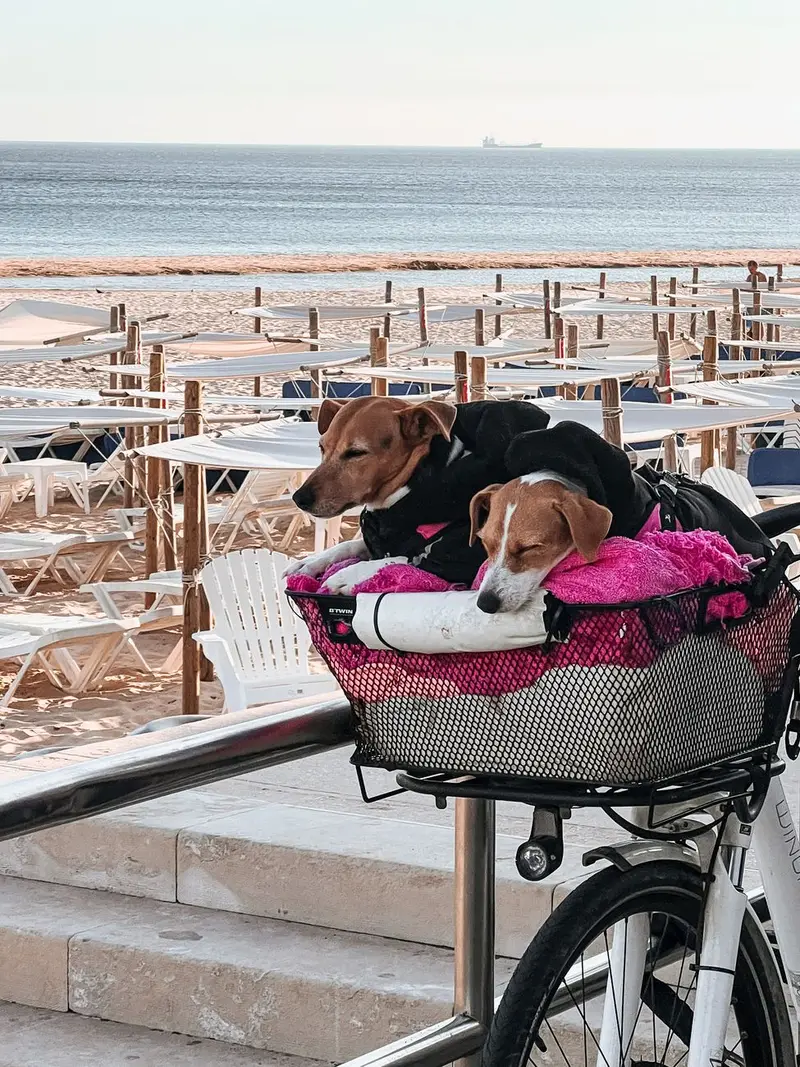
The dog bike basket weight limit is the whole decision, and it's smaller than most owners expect. A front basket sits high and changes the bike's balance the moment anything heavy shifts inside it, which is why the rule of thumb among basket and trailer makers is roughly 20-25 lb (9-11 kg) for a basket before you move to a trailer. Our own Lectric XPedition 2 Long-Range rates its front basket at 30 lb (13.6 kg), which is about as generous as a front basket gets.
A rear rack is a different question, and this is where the honest numbers get interesting. That same XPedition 2 rates its rear rack at 300 lb (136 kg), more than the Tern GSD S10 manages at $7,999, and the GSD only rates its rack at 220 lb. A secured rear-mounted carrier on a properly rated rack handles a genuinely big dog with no trailer required.
A dog over about 50 lb (23 kg), or one that shifts its weight around mid-ride, is safest in a proper trailer: enclosed, low centre of gravity, built to be towed rather than balanced on top of. That's the point where the basket math stops working, no matter how generous the rack underneath it is.
Electric Bike Dog Trailer: What It Actually Buys You
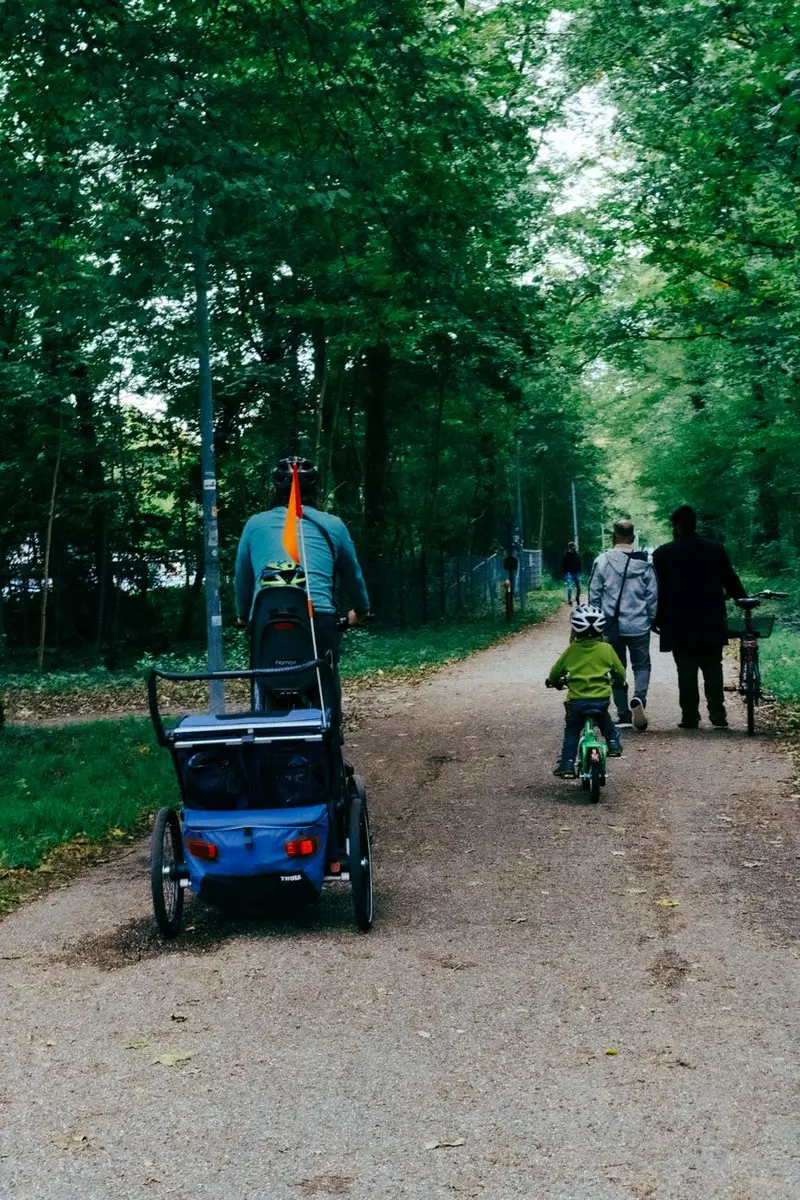
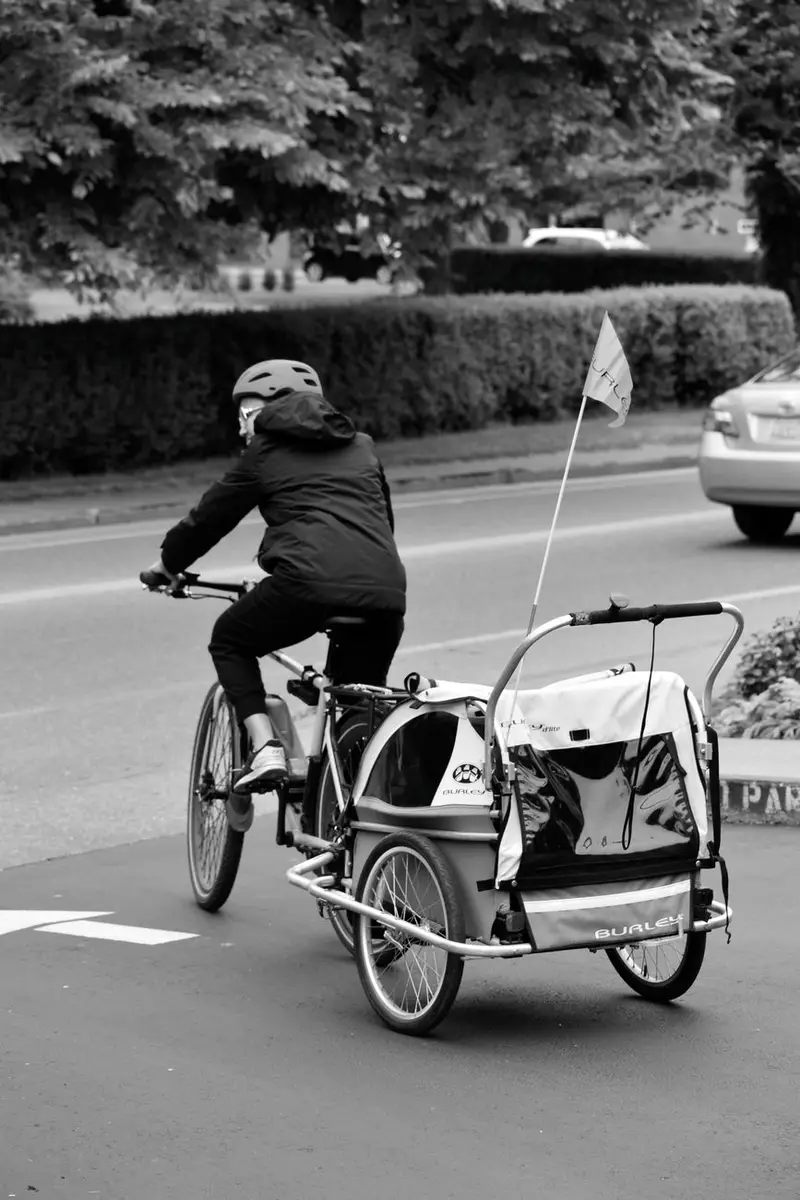
An electric bike dog trailer buys you three things a basket can't: a lower centre of gravity, a lid that keeps a nervous dog from jumping out at a red light, and a hitch that doesn't care how the rest of the bike is loaded. Worth saying plainly rather than steering you toward the wrong accessory: we don't stock a trailer built specifically for pets. What we do carry is the QuietKat All-Terrain Cargo Trailer ($279.99), built for hauling gear over rough ground, which tows a crate or a soft carrier just as happily as it tows a cooler.
Fit the hitch before you fit the dog. Most modern e-bikes run thru-axles rather than the quick-release skewers older trailers were designed around, and a mismatched adapter is the single most common reason a new trailer owner gives up in the first week. Check your own bike's axle spec against the trailer's hitch before anything ships.
Trailer manufacturers generally cap recommended speed at 10-15 mph (16-24 km/h) on a straight, flat path, well down from what most e-bikes are capable of, and slower again through corners, because the forces on a trailer scale with speed faster than the numbers suggest. It's one of the rare cases where the extra torque and top speed you paid for is a feature you deliberately don't use.
Best Cargo Ebike For A Dog
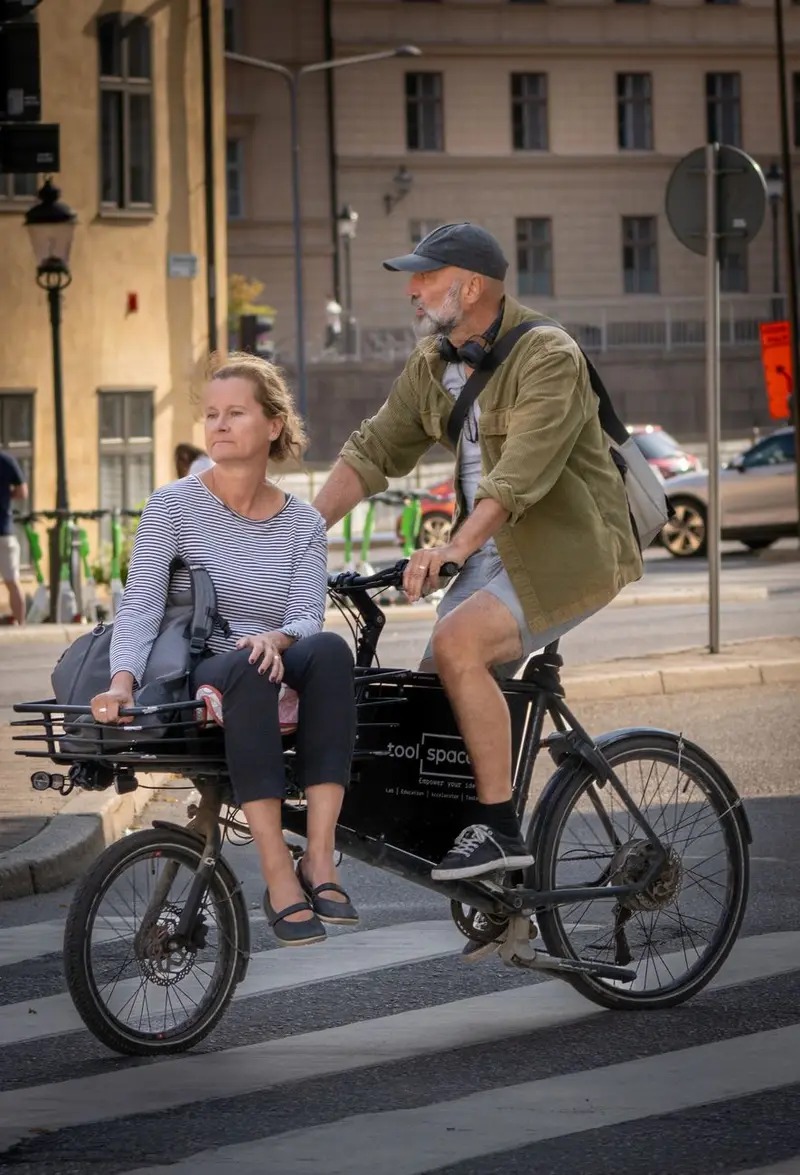
The best cargo ebike for a dog is whichever one actually rates its rack for the weight you're putting on it, and the honest surprise in our own range is that the cheapest cargo bike does this best. The Aventon Abound LR at $1,999 carries a 440 lb total limit on 80 Nm of torque. That's plenty for a secured carrier plus a genuinely large dog, and it's the floor of our cargo range, not the ceiling.
Step up and the numbers move around more than the price would suggest. The Rad Power RadWagon 5 ($2,399) carries a 375 lb total payload, the Velotric Packer 1 ($2,199) rates its rear rack at 176 lb, and the Tern GSD S10 ($7,999), genuinely the nicest bike to ride on this list, still only rates its rack at 220 lb: less than the $1,999 Lectric manages for a quarter of the price.
That's worth stating plainly, because it's the shop's job to say it rather than sell around it: more money buys a nicer ride, not automatically a bigger dog capacity. We'll talk you down a category if the cheaper bike genuinely does the job, and on rack weight alone, the $1,999 Aventon does it better than the $7,999 Tern.
If the dog is the only cargo you carry, no kids, no weekly grocery run, just a dog and the odd trip to the vet, a standard commuter or folding bike with a front basket accessory does the job for a fraction of a cargo bike's price. Save the longtail for when you're actually hauling more than one thing.
Getting Your Dog Used To It

Getting your dog used to it takes less time than getting used to the bike yourself did, if you don't skip the boring bit. Start stationary: put the dog in the basket or trailer, motor off, and let it sit there being mildly confused for a few minutes while you feed it something good. Repeat until confused turns into bored.
Next, walk the bike with the dog aboard rather than riding it. Then a slow lap of an empty car park on the lowest assist level, which is the step most owners skip and the step most first rides actually go wrong without. (Pauses to let the dog decide whether this was a good idea.) It usually is.
A dog running alongside on a lead needs the opposite order: recall and "leave it" solid on the ground first, motor second. A dog that won't stop chasing a squirrel on foot will not suddenly develop restraint because the two of you are moving faster.
When A Dog E-Bike Isn't The Answer

A dog e-bike isn't the answer for every dog, and the guides trying to sell you a trailer will rarely say so. Puppies with growth plates still closing, senior dogs with joint problems, and short-nosed breeds that struggle to cool down are all better off on a lead at walking pace than bouncing along in a basket. Per the AVMA's warm-weather pet safety guidance, brachycephalic breeds especially need close watching for heat stress on anything more strenuous than a stroll, motor or not.
A genuinely anxious or reactive dog, one that loses its mind at a passing cyclist on a normal walk, is not going to have a better time strapped to one. Fix the reactivity first, or don't. That's a trainer's job, not a bike shop's, and no amount of torque sensor fixes a dog that's scared of the bike.
And if the honest answer is a ten-minute loop around the block twice a day, you don't need any of this. A cargo bike weighs 30-40 kg, a genuinely heavy thing to haul up a flight of stairs for a walk you could manage on two legs in the time it takes to wheel the bike outside. Save the bike for the trips a dog on a lead can't keep up with, not the ones it already can.
Honest Pricing For Carrying Your Dog
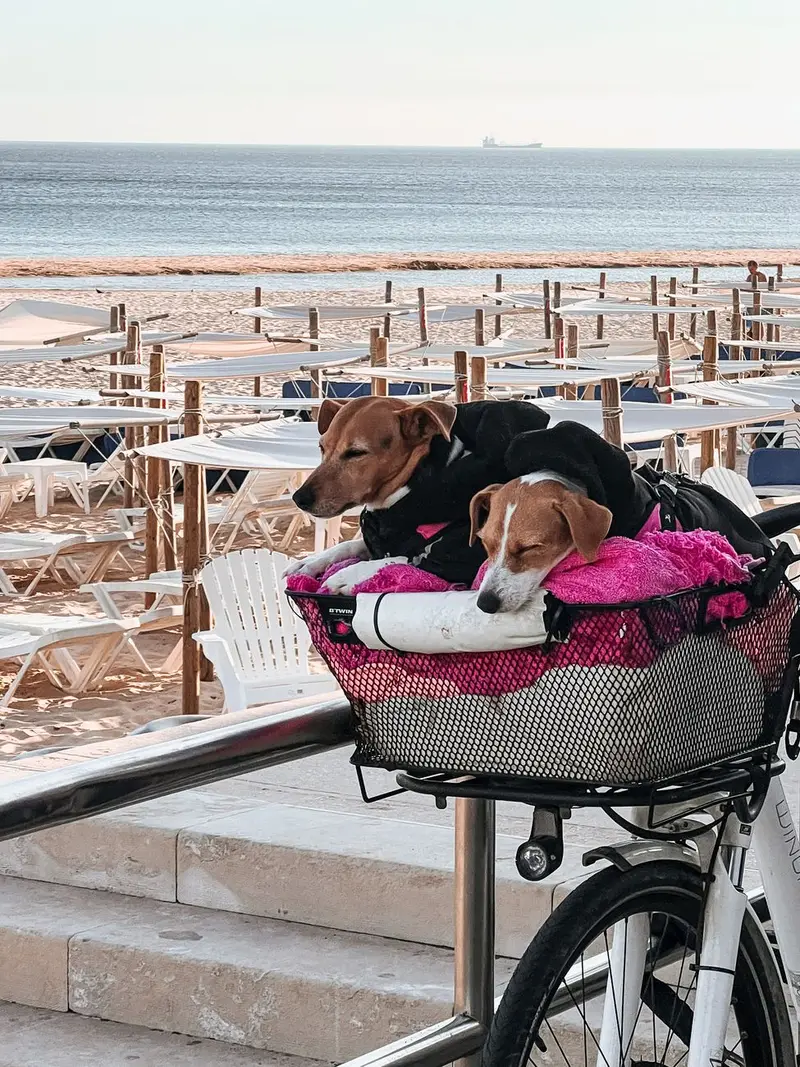
Honest pricing for carrying your dog starts well below the price of a bike. The Ride1Up Pet Carrier runs $100 and covers a small dog in a basket setup on almost any commuter. The Aventon Passenger's Chair, built for the Abound SR and LR, is $139.99 and turns a cargo platform into a proper seat. The QuietKat All-Terrain Cargo Trailer is $279.99 if a trailer is genuinely the right call.
A dedicated cargo bike runs $1,999 to $7,999 across our range: real numbers, not a "starting at" figure designed to get you in the door and disappointed. Most owners doing the school run, the grocery run and the dog don't need the $7,999 end of that. The $1,999 Aventon Abound LR already out-rates it on rack capacity, and the difference above that buys ride quality and finish, not how much your dog is allowed to weigh.
Try before you commit to any of it. A trailer that fits your bike on paper and a dog that's genuinely fine in a basket are both things you find out in twenty minutes in an empty car park, not from a spec sheet. Your dog, your back and one very confused first attempt will all thank you for it.
Straight answers

What is the best carrier for a dog on an e-bike?
For a small dog, a front basket rated to at least 20-25 lb, like the Ride1Up Pet Carrier ($100). For a dog over about 50 lb, use a secured rear-rack carrier on a bike rated for it, or a proper trailer. There's no single best answer independent of the dog's weight.
How much weight can a cargo e-bike carry?
It varies a lot by model. In our own range, rear rack ratings run from 176 lb on the Velotric Packer 1 to 300 lb on the Lectric XPedition 2 Long-Range, with total payload limits of 375-463 lb once the rider is included. Check the specific bike's own rating rather than assuming one figure covers every cargo bike.
Is it safe to ride an e-bike with a dog in a basket?
Yes, for a small, calm dog under roughly 20-25 lb, at low assist and modest speed. A basket sits high and raises the bike's centre of gravity, so it's the wrong choice for a dog that moves around mid-ride or weighs more than that.
Can any dog run alongside an e-bike?
No. Healthy, adult, medium-to-large dogs are the ones built for it. Puppies with open growth plates, senior dogs, and short-nosed breeds should stick to walking pace. Check with a vet if you're unsure, which is the same advice the AKC gives.
How do I get my dog used to riding along on a bike?
Stationary first, motor off, with treats, until the dog is bored rather than nervous. Then a walked lap with the dog aboard, then a slow ride on the lowest assist level in an empty space before anywhere near traffic.
Do I need a dedicated dog e-bike?
Almost never. A regular e-bike with the right accessory for your dog's size, weight and temperament covers nearly every case. A dedicated pet cargo bike only earns its price if the dog is genuinely the main cargo you carry, every day.
Sanne de Vries
Grew up doing everything by bike; treats a car like a weird special occasion.
Keep reading
Browse the range
Still not sure which one? Give us a shout.