
Lukas Vogt · Germany · 10 min read
Torque Sensor Ebike: What You Pay For
Published 2026-08-21
TL;DR
A torque sensor ebike measures how hard you're pushing on the pedals, dozens of times a second, and matches the motor's help to that effort. A cadence sensor only checks whether the pedals are turning at all, so it delivers a flatter, less natural kind of push. The result: smoother power delivery, less lurch at the lights, and better use of every watt-hour in the battery, real-world range still landing in the normal 45 to 110 km window depending on the bike and how hard you lean on the assist. It's the single spec worth paying extra for on a hilly or heavy-load bike. On a flat, short commute, a cheaper cadence bike will do the job and you can spend the difference elsewhere.
I've explained torque sensors so many times at dinner parties that my partner now leaves the room the moment someone asks what I do for a living. Fair. But here's the two-minute version, because it's the one spec on an ebike's page that genuinely earns the word 'smart', and most listings bury it under a line about the frame colour.
A torque sensor ebike measures how hard you're pushing on the pedals, not just whether you're pedalling, and it uses that reading to decide exactly how much the motor should help, moment to moment. A cadence sensor, the cheaper and far more common alternative, only knows the cranks are spinning. It can't tell a gentle roll from a max-effort grind up a hill, so it gives you the same shove either way. One of these feels like your own legs, working harder. The other feels like someone else is driving.
It measures effort, not just motion
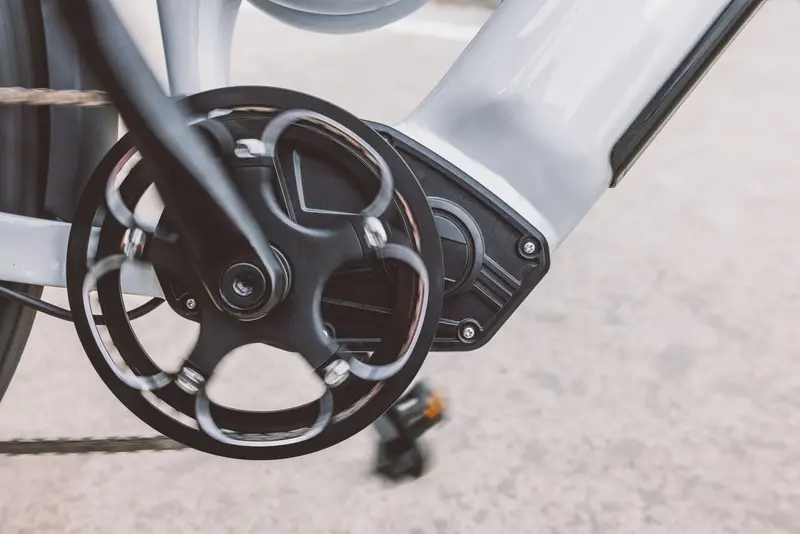
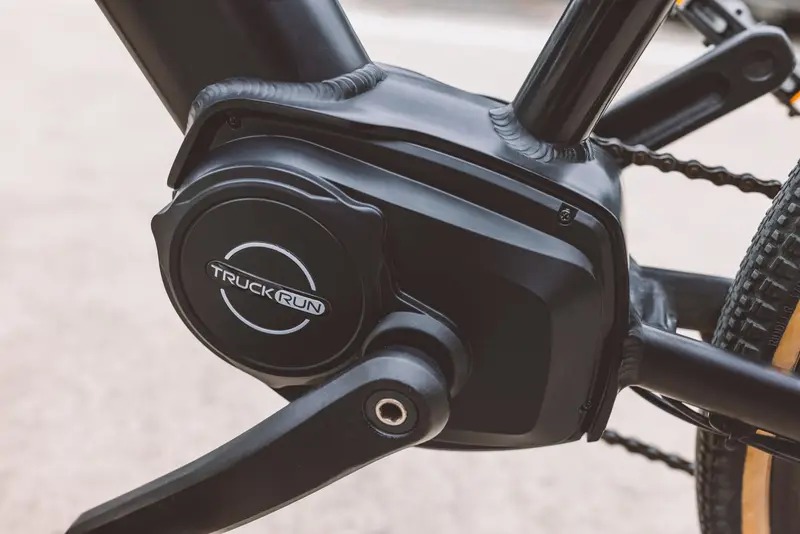
Mechanically, it's a strain gauge sitting in the bottom bracket or the motor's drive axle, reading the tiny amount of twist in the metal as you push down on the pedals. That twist is proportional to force, so the sensor converts it into a live effort reading, dozens to over a thousand times a second depending on the system, and feeds it straight to the motor controller. Bosch's own eBike Systems documentation describes exactly this: torque measured in newton metres, describing how hard you're pushing on the pedals right now, not how fast the wheel happened to be turning a moment ago.
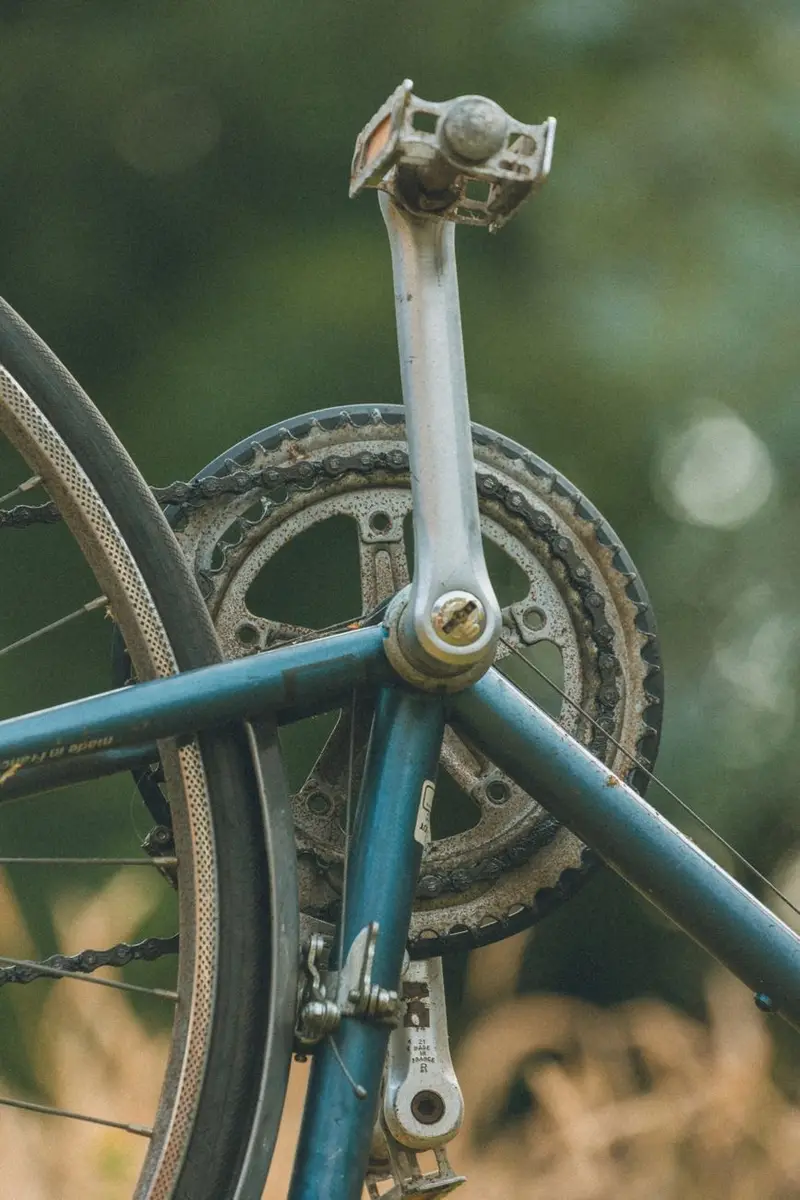
A cadence sensor is a much blunter instrument by comparison. It's a magnet and a switch, or something equally simple, counting crank rotations per minute. It knows the pedals are moving. It has no idea whether you're spinning them with one finger or standing on them with your full body weight, so it can only offer a handful of fixed assist levels tied to speed and gear, not effort.
(If you've ever ridden a cadence bike that lurches forward the instant you start pedalling, that's the whole mechanism laid bare. It isn't reading you. It's reading the crank.)
Torque sensor vs cadence sensor: the difference you can feel
Ride a torque-sensed bike and a cadence bike back to back and the gap is obvious inside the first fifty metres. On the torque bike, power arrives in proportion to effort: push a bit harder into a headwind or a slight rise and the motor quietly matches you, no lurch, no lag. Ease off at a junction and the assist eases off with you, smoothly, rather than cutting like a switch.
A cadence bike, by contrast, tends to surge. The moment the pedals start turning, it delivers whatever fixed level of assist that gear and speed combination is mapped to, whether you needed a nudge or a shove. It's a bit like being goosed by a friendly but overenthusiastic dog: technically helpful, occasionally alarming.
That gap shows up most at standing starts, in tight traffic, and on steep pitches, exactly the moments where a bike behaving predictably matters more than the rest of the ride combined. A torque sensor's proportional response keeps things smooth there. A cadence sensor's flat response is where it can catch you off guard.
What it actually buys you: range and ride feel, not marketing
This is the one opinion I'll die on in this post: torque sensor over cadence sensor, if the budget allows it. It feels like your own legs, and it stretches the range you get out of a charge, because it isn't wasting watt-hours on a fixed assist level you didn't ask for on a section of road that didn't need it.
Real-world range across the catalogue runs 45 to 110 km on a single charge, depending on the model and how hard you lean on the assist, for a 75 kg rider on mixed terrain. That window holds for torque and cadence bikes alike, but a torque-sensed bike spends less of that battery on assist you didn't need, because it's only delivering power proportional to what you're putting in. A cadence bike on a flat stretch is either giving you more help than the moment calls for or forcing you to fiddle with assist levels manually to get the same result.
It isn't a marketing bullet point. It's a mechanical fact about how the two systems decide to spend the same battery, and it's the single spec on a listing most worth reading past the frame colour for.
What to check on the spec sheet, not the ad copy

Torque sensing correlates strongly with mid-drive motors, which use the bike's own gears and tend to run the more capable sensor as standard. Shimano's own STEPS service documentation confirms torque reading is built into every current STEPS mid-drive unit they ship. Hub motors ship it less reliably, since a cadence-only hub is cheaper to build and hits a lower price point. Neither layout is universally 'best': a mid-drive climbs better and puts the sensor closer to where the force is applied, a hub motor is simpler and cheaper to service. But if torque sensing matters to you, check the motor type first, it's the strongest single predictor on a spec sheet that doesn't say the word outright.
A handful of bikes let you have it both ways. The Aventon Aventure 3 in our own range ships with a physical Sensor Switch, so you can run it as a torque-sensed bike day to day and drop to cadence mode if a component ever needs servicing and the torque reading gets temperamental. At $1,999 with an 80 Nm hub motor, it's proof the feature doesn't require a mid-drive price tag to get.
Watch for the words 'pedal assist' alone on a listing. Every ebike with pedal assist has some sensor behind it, that's just how the motor knows to turn on at all, but 'pedal assist' on its own tells you nothing about which sensor is doing the reading. If the listing doesn't say torque or cadence explicitly, assume cadence until you've confirmed otherwise. It's a separate question from legal class, by the way, our breakdown of the different classes of ebikes covers assist limits by region if that's the spec you're here for.
When a cadence sensor is honestly fine
Here's the bit most spec sheets won't tell you: if your ride is short, flat, and mostly stop-start, a cadence sensor isn't a downgrade you'll notice. The Aventon Soltera 2.5, at $1,199 with a 45 Nm hub motor, is built for exactly that trip, a flat urban commute where the surge a cadence system delivers barely registers because there's nothing steep enough to expose the difference.
Buy for the trip you actually take, not the one you imagine on a hilly weekend you might ride twice a year. A rider doing eight flat kilometres each way to the same office five days a week is not going to feel the torque-sensor premium the way a rider climbing a genuine hill with a loaded pannier will. (I say this as someone who has, in fact, bought the expensive one for the flat commute. My legs did not notice. My bank account did.) Spend the difference on the bigger battery or the better lock instead.
Where I'd draw the line firmly the other way: any bike carrying real weight, cargo, a passenger, a loaded rack, or climbing anything you'd call a hill rather than a rise. There, a cadence sensor's flat, one-size-fits-all push stops being a minor annoyance and starts being the thing that makes the bike genuinely harder to ride well.
Honest pricing on a torque-sensor bike
City and commuter bikes on the site run $1,199 to $18,700, with most riders landing $1,500 to $3,000 ride-away, and torque sensing shows up across most of that band rather than only at the top, the Aventure 3 at $1,999 and the mid-drive Aventon Ramblas at $2,899 both carry it as standard. What changes at the top of the range is motor sophistication and battery size, not whether the sensor exists at all.
Whatever you spend, the same two checks apply regardless of sensor type: a 1-year warranty covering frame, motor, and battery as standard, and a battery capacity guarantee holding 60% of rated capacity at the one-year mark. Every bike is workshop-checked before it ships, torque sensor or not, which is the part a marketplace listing three letters and a shrug won't tell you either.
If range is the number you're optimising for rather than ride feel on its own, our guide to dual-battery ebikes runs the honest math on when a second pack earns its keep over a better sensor. Different lever, same question: are you paying for a real problem, or a spec-sheet line that sounded good in the shop.
Straight answers

Which are the best ebikes with torque sensor fitted?
Mid-drive bikes almost always have one, since the motor sits at the cranks where effort is easiest to read. Among hub-motor bikes it is the spec worth checking line by line, because two bikes at the same price will often differ on exactly this and the cheaper-feeling one is usually the cadence bike.
How does a torque sensor work on an ebike?
A sensor, usually in the bottom bracket or motor axle, that measures how hard you're pushing on the pedals and feeds that reading to the motor controller dozens of times a second, so the assist scales with your actual effort rather than a fixed level.
What is the difference between a torque sensor and a cadence sensor?
A torque sensor measures pedal force and delivers proportional assist. A cadence sensor only detects whether the pedals are turning and delivers a fixed assist level regardless of effort, which tends to feel like a surge rather than a smooth push.
Do torque sensor ebikes have a longer range?
Real-world range still runs 45 to 110 km per charge depending on the model and assist level, same window as a cadence bike. Where a torque sensor helps is spending that battery more efficiently, since it only delivers power proportional to what you're putting in rather than a fixed level regardless of need.
Are torque sensor ebikes more expensive?
Not always. The Aventon Aventure 3 carries torque sensing at $1,999 with a hub motor, well inside the $1,500 to $3,000 band most riders land in. Torque sensing correlates with mid-drive motors, which do run higher on average, but it isn't exclusive to them.
Can you add a torque sensor to an existing ebike?
Not as a simple retrofit. The sensor has to be built into the bottom bracket or motor axle at manufacture, so adding one after the fact usually means replacing the whole drive unit, not bolting on a part. It's a decision to make at purchase, not after.
Does a torque sensor change an ebike's legal class?
No. Legal class is set by top assisted speed and motor power, not by which sensor is doing the reading. A Class 1, 2, or 3 bike can run either sensor type — see our guide to ebike classes for the full breakdown by region.
Lukas Vogt
Mechanical-engineering background; will explain torque sensors until you beg him to stop.
Keep reading
Browse the range
Still not sure which one? Give us a shout.