
Lukas Vogt · Germany · 10 min read
Ebike Touring: How Far You Can Really Go
Published 2026-09-08
TL;DR
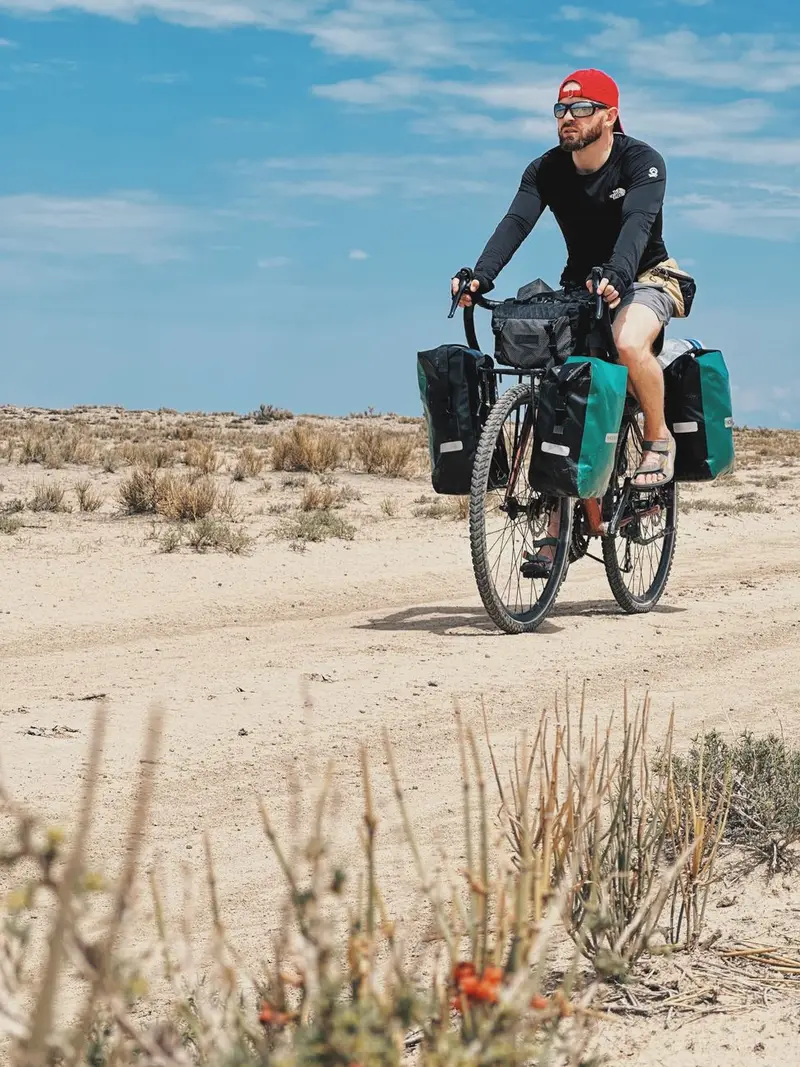
Short version: real-world ebike touring range runs 45 to 110 km per charge depending on the bike, the load and the terrain, not the number printed on the battery. Plan your days around charging stops, not the spec sheet, and only reach for a second battery or a genuinely long-range bike if your actual route needs it. A loaded pannier set and a heavier rider both eat into range faster than the marketing implies. If your route has no power for more than two or three days at a stretch, an ebike is the wrong tool, not the right one with extra steps.
Ebike touring is the point where a spec sheet stops being marketing and starts being a promise you're about to test at kilometre sixty, uphill, into a headwind. (Every touring cyclist has had this exact conversation with their own legs. Mine happened somewhere on the German-Czech border, battery at nineteen per cent, phone signal at zero.) The honest answer up front: you can tour comfortably on an ebike if you plan around real-world range rather than the number on the box, and if you accept that charging is now part of the route, not an afterthought.
I've built two dual-battery rigs, killed one controller doing it wrong, and toured on both of the survivors. What follows is the version I wish someone had told me before I learned the hard way that a fully loaded pannier set eats range the way a Labrador eats an unattended sandwich.
What ebike touring actually means

Ebike touring means multiple days in the saddle, self-supported or close to it, with the assist doing real work rather than flattening one hill on the way to brunch. That's the distinction that matters: a single big day out and back is an event, over by dinner, forgiven by the legs by morning. Touring is the same arithmetic, repeated for a week or two, with less certainty about where you'll charge tonight and no ride back to base if the maths was wrong.
It also means carrying weight you don't carry on a commute. Panniers, tools, a stove if you're camping, a change of clothes that starts smelling optimistic by day three. All of it rides behind you, and all of it comes out of the same battery that gets you up the next hill. A 15 to 20 kg load isn't unusual for a fully self-supported trip, and every kilo of it is a kilo the motor has to move, not just the rider.
None of this is exotic engineering. It's arithmetic done honestly, which is the part most marketing copy skips. (Range on the box assumes a 75 kg rider, flat road, lowest assist and a tailwind that, in my experience, exists only in the product photo.) Run the same maths on the actual route, the actual load and the actual hills, and the touring version of the number gets a lot more useful and a lot less impressive.
Before any of that, run the same checks you'd do at home, just more often on the road: tyre pressure, chain lube and a brake check. Our maintenance schedule takes thirty seconds before a normal ride. On tour, four days and 300 km in, it's the difference between a five-minute stop and a very long walk.
Electric bike long distance range, the honest version
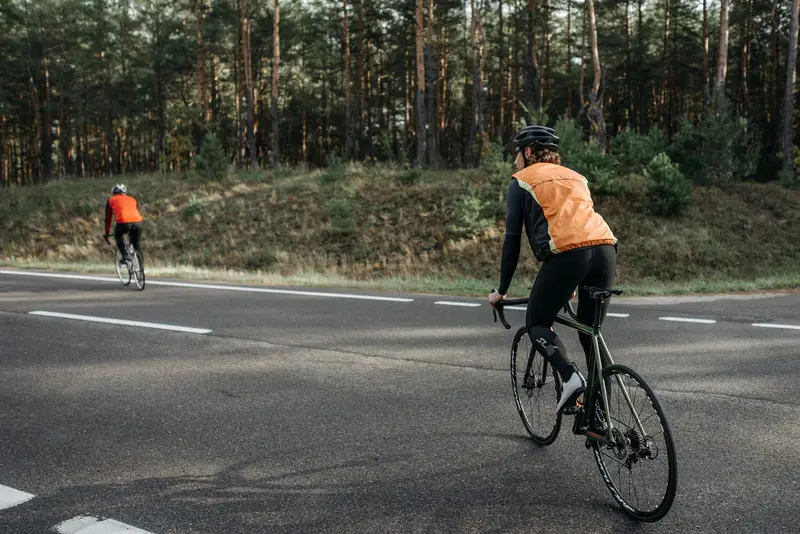
Electric bike long distance range on a spec sheet is measured somewhere that doesn't exist: flat, calm, warm, lightest rider, lowest assist. Real-world range for a 75 kg rider on mixed terrain runs 45 to 110 km per charge, depending on the bike and how hard you lean on the motor. Touring pushes you toward the low end of that band, not the high end, because you're heavier with luggage, slower into headwinds, and using more assist to keep a loaded bike moving on hills that would be nothing unloaded.
Do the arithmetic before you leave, not on day two. A conservative single-charge day is 40 to 60 km if you want charge left over for the wrong turn, the unplanned detour, the café that turns into two hours. Budgeting to the edge of the number on the box is how a good day turns into pushing a very heavy bicycle the last eight kilometres.
Wind and cold both take a bite you won't see on the spec sheet either. A steady headwind can cost as much range as a genuine hill, and a cold morning start pulls more from the battery than the same ride at midday, since a cold pack simply delivers less. None of that is a fault in the bike. It's physics, and physics doesn't read marketing copy.
Route your days around real infrastructure, not optimism. Mapping tools built for touring cyclists, like Adventure Cycling Association's route network, are built around resupply points and services, not just point-to-point distance, which makes the charging-stop planning in a later section considerably easier than working from a generic map app.
(Ask me how I know all this the hard way. Actually, don't. The answer involves a farmhouse, a very patient dairy farmer, and an extension cord.)
The best electric bike for long distance touring isn't the biggest number on the box
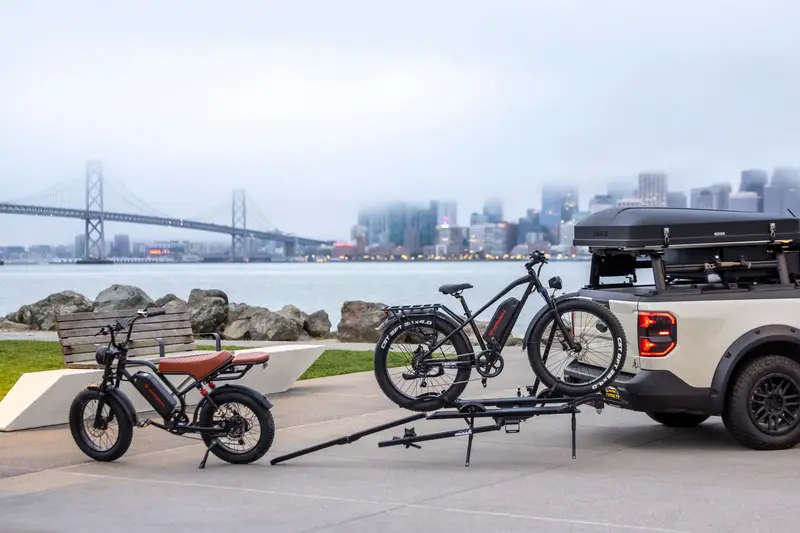
The best electric bike for long distance touring is not the one with the longest headline range. It's the one that still handles like a bicycle once you've loaded it, has gearing low enough for a loaded climb, and has somewhere solid to actually mount the luggage.
Our own example worth naming: the Lectric XPedition 2 Long-Range, a cargo-class bike built around two 840 Wh packs for 1,680 Wh combined and a genuine 274 km on the dual pack. It carries a 300 lb rear rack rating and an 8-speed Shimano Altus drivetrain, which matters more on a loaded climb than the motor's headline wattage does. At $1,999, it's the honest kind of expensive: the number on the price tag is what the range actually costs, not a teaser for the trim you'd actually want.
The trade-off is honest too. Without either battery fitted it's 29.5 kg, and each pack adds 4.1 kg, so a fully loaded dual-battery setup is closer to 38 kg before your panniers go on. That's cargo-bike heft, which is the price of cargo-bike range. You're not getting 274 km for free.
That's an unusually specced bike, not the baseline. Most touring-capable ebikes run a single pack and the 45 to 110 km real-world band above, which is still plenty for the majority of multi-day routes if you plan your charging stops properly. More on that next.
Touring ebike or electric touring bike: what changes on the frame
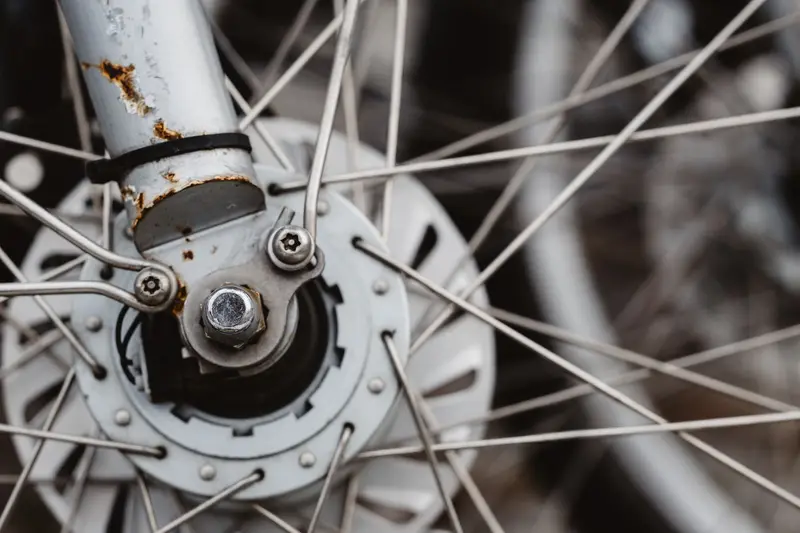
A touring ebike and an electric touring bike are the same idea wearing two different labels, and the frame tells you which one you're actually looking at. What you want: rack and fender mounts that aren't an afterthought bolted to the seatstay, tyre clearance wide enough for something more forgiving than a slick, and gearing that goes low enough to move a loaded bike up a hill you'd otherwise walk.
Gearing matters more here than almost anywhere else in ebike shopping. A low enough bottom gear, sometimes called a granny gear, is what keeps your knees intact on a loaded climb once the assist is doing what it can and the rest is still you. The XPedition 2 LR's 8-speed Shimano Altus drivetrain earns its place in this guide for exactly that reason, not for the badge on the derailleur.
Hub motor or mid-drive both work here, and which one matters more on hills than on flat touring routes. We've covered hub motor vs mid drive for hills properly elsewhere; the short version for touring is that a mid-drive uses your gears, so it stays efficient loaded and climbing, while a hub motor is simpler and, on flatter routes, does the job for less money.
What matters less than forums suggest: full suspension. Bringing one on a tarmac or gravel tour is the ebike equivalent of bringing a lightsaber to a picnic. Impressive, heavy, and solving a problem you don't have. Save it for the day rides where the terrain actually asks for it.
Charging a long distance ebike on the road
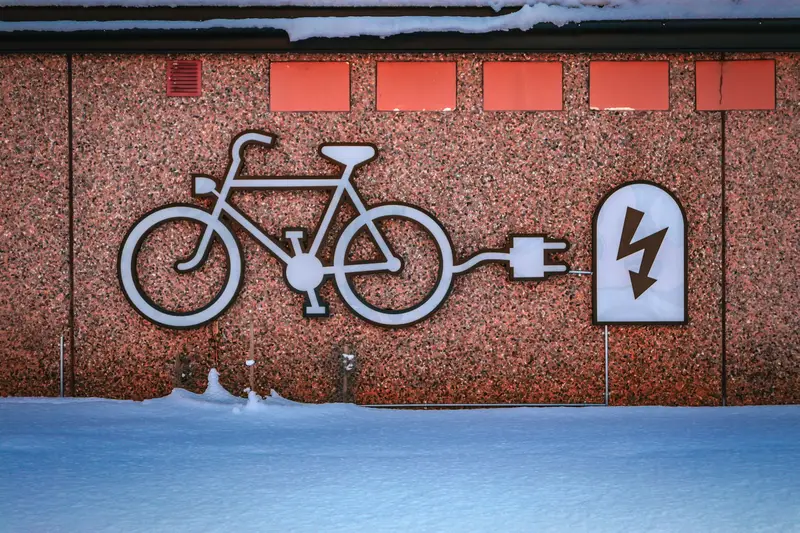
Charging a long distance ebike on the road is a routing problem before it's an electrical one. Plan overnight stops with power, not just a bed: campsites with outlets, guesthouses, cafés that don't mind a battery charging quietly under the table over a long lunch. A once-a-day top-up while you sleep or eat covers most single-pack routes without ever needing a mid-ride charge.
A typical 500 Wh pack costs $0.12 to $0.20 to charge fully, so charging isn't the expensive part of ebike touring. Finding somewhere to do it is. Carry the actual charger, not a hopeful adapter collection, and know your plug standard before you cross a border, because that farmhouse extension cord story above only works if the plug fits.
Riders following an established route have it easier here. If your tour follows a network like EuroVelo, Europe's official long-distance cycle route system, towns and services already cluster roughly where the network expects you to stop for the night, which does most of the charging-stop planning for you before you've even opened a map.
If your route genuinely can't guarantee power every one to two days, a second battery or a dual-battery bike like the XPedition 2 LR above buys you slack rather than a doubled number on paper. It's the one case in this guide where more battery is the right call rather than the expensive one, covered properly in dual battery electric bikes, worth it or not.
When ebike touring isn't the answer
Don't tour on an ebike if your route genuinely has no power for more than two or three days at a stretch: true wilderness bikepacking, remote sections of a long-distance trail, anywhere charging means hoping a stranger has a generator. A dead battery on a loaded ebike isn't a lighter bicycle. It's 22 to 40 kg of dead weight you now have to push, because the motor and battery add mass a standard touring bike never carried in the first place.
Nine times out of ten, the honest answer for a genuinely off-grid multi-week tour is still a standard touring bike. It's lighter empty, far lighter dead, and it has never once run out of charge four hours from the next town. Save the ebike for routes where power shows up every night or two, which, in fairness, is most of them.
This is also where regional rules bite. Assist limits differ by country, 25 km/h in the EU under the EN 15194 standard against 20 or 28 mph across the US classes, and a remote route that crosses borders can turn a legal Class 3 bike into an illegal one halfway through the trip. Check before you pack, not somewhere past the second border.
And don't buy the biggest-battery option just in case if your actual planned routes sit comfortably in the 45 to 110 km real-world band with regular overnight charging. That's the same over-buying most riders do on a daily commute, just wearing panniers.
Honest pricing for a touring-capable ebike

Honest pricing for a touring-capable ebike starts at the same place as any other bike: from $1,199, which buys round-town range and none of the rack capacity or gearing this guide is about. A genuinely touring-ready bike, rack mounts, low gearing, meaningful single-pack range, starts closer to $1,500, and the dual-battery XPedition 2 LR above sits at $1,999 for the specific case of routes that need the extra range. None of that includes panniers, a pump, spare tubes or a lock that's actually worth trusting overnight outside a tent, so budget past the bike itself.
Here's the one place in this guide where I'll actually tell you to buy more range than you strictly need on paper, and it's the opposite of the usual advice. We once had a rider pay a big premium for 140 km of range on a 12 km commute, carry a battery he never came close to emptying, and admit the cheaper bike would have done the job. Buy for the trip you actually take, not the trip you imagine, is still the right rule. It just means that for a genuine multi-day tour with real charging gaps, the trip you're actually taking needs the range, and pretending otherwise on a spreadsheet doesn't change the hill.
Skip the bike that wins on paper and can't carry a pannier rack. Buy the one that wins on the actual road, since that's the only place you'll be riding it.
Straight answers

How far can you realistically go ebike touring in a day?
Budget 40 to 60 km per charge if you want margin left for detours and wrong turns, inside the 45 to 110 km real-world range band for a 75 kg rider on mixed terrain. Loaded touring sits toward the low end of that band, not the high end.
What is the best electric bike for long distance touring?
The one that still handles loaded, has low enough gearing for a loaded climb, and has proper rack mounts rather than the longest number on the spec sheet. A dual-battery bike like the Lectric XPedition 2 LR (274 km combined, 300 lb rear rack) is the right call specifically when your route can't guarantee daily charging.
Do you need a dual battery bike for ebike touring?
Only if your route genuinely can't guarantee power every one to two days. For routes with regular overnight charging, a single pack inside the 45 to 110 km real-world band is enough, and a second battery is solving a problem you don't have.
How much does it cost to charge an ebike while touring?
Around $0.12 to $0.20 per full charge for a typical 500 Wh pack. The cost is trivial. The logistics of finding somewhere to plug in every night are the actual planning problem.
Is a touring ebike heavier than a regular touring bike?
Yes, meaningfully. Most ebikes run 22 to 30 kg and cargo-class touring ebikes 30 to 40 kg, against a fraction of that for a standard acoustic tourer. That weight is nothing while the motor's running and a genuine problem the moment the battery dies.
Can you take a touring ebike across borders?
Legally, check first: assist limits and classes differ by region, 25 km/h in the EU against 20 or 28 mph US classes, and rules don't harmonise just because you're on a bicycle. Our guide to how the legal e-bike classes actually work covers the rest.
What's the difference between a touring ebike and an electric touring bike?
Nothing meaningful. Both terms describe the same category: rack and fender mounts, wider tyre clearance, low gearing for loaded climbs, and enough real-world range to string days together. Treat the two phrases as interchangeable when you're shopping.
Lukas Vogt
Mechanical-engineering background; will explain torque sensors until you beg him to stop.
Keep reading
Browse the range
Still not sure which one? Give us a shout.