
Marcus Hale · US · 11 min read
Electric Bike for Delivery Riders
Published 2026-08-24
TL;DR
The right electric bike for delivery work is a Class 2 with a throttle, at least 500 Wh of battery, and a rack or frame genuinely rated for cargo weight, not a folding commuter with a pannier hook. Real-world range runs 45 to 110 km (28 to 68 miles) depending on the bike and how hard you lean on the throttle, and a full charge costs about $0.12 to $0.20. Buy for the shift you actually ride: the cheapest fix for a route that's too long is a second battery, not a bigger bike. If your route is rural, spread out, or hauling more than a bike frame can rate for, read the last section before you buy anything.
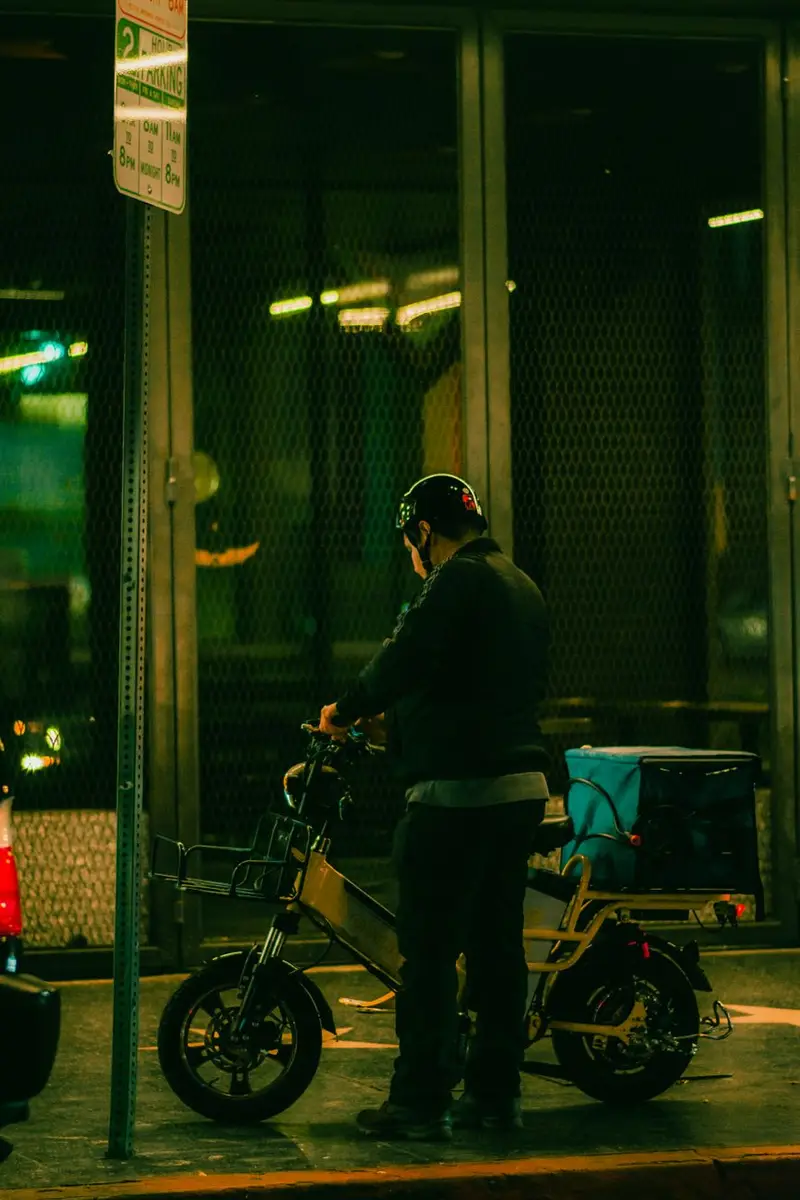
Every food-delivery platform's promo video shows someone gliding through golden-hour traffic with a paper bag balanced like it's nothing. Nobody shows the fourth hour of a rainy Tuesday shift, the fifth red light in a row, or the moment the battery percentage does that thing where it drops two points at once. An electric bike for delivery work has to survive that version of the job, not the commercial.
This isn't a 'best delivery ebikes' ranking pulled off a spec sheet I've never ridden. It's the four things that actually decide whether a bike survives a full shift: class and throttle, battery and real range, how much weight the frame is actually rated to carry, and what the whole thing costs once electricity is weighed against what a car would have cost you instead. Skip the marketing copy. Here's the version that matters when the app pings twice while you're still climbing the first hill.
Class 2 wins for most delivery routes
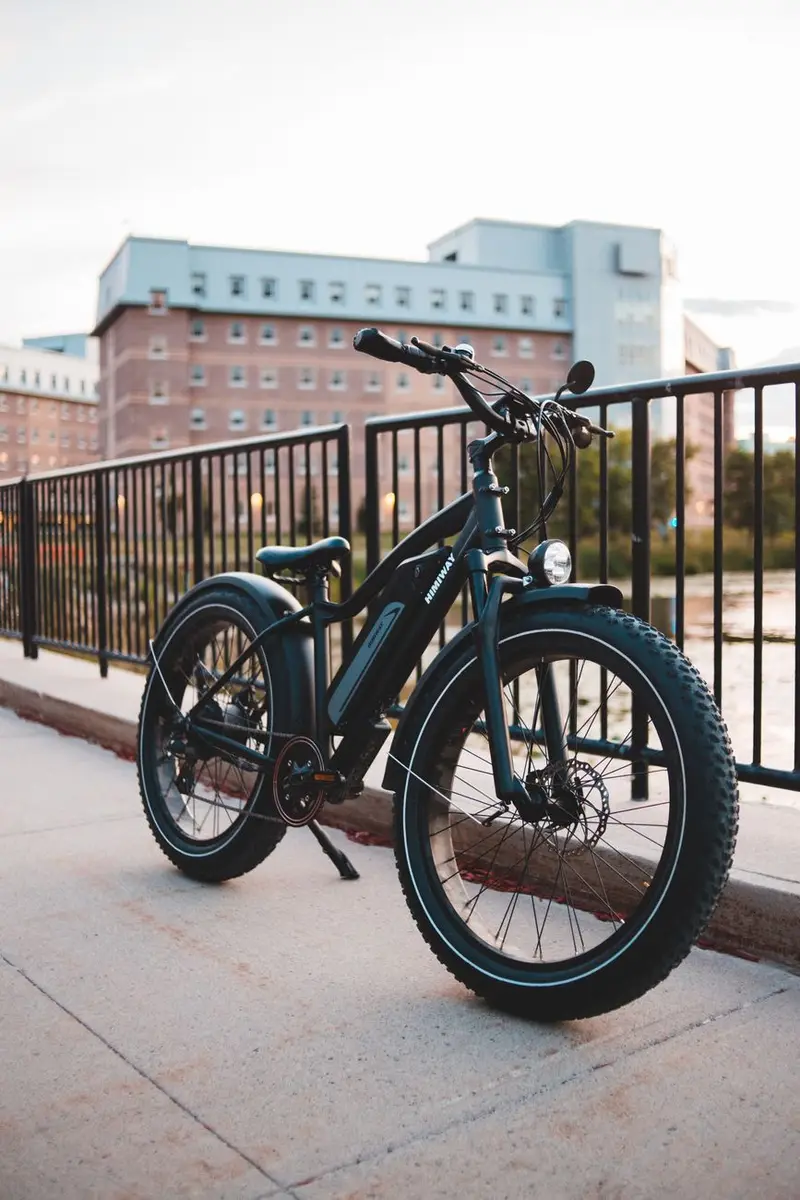
Every e-bike sold falls into Class 1, 2 or 3, and for delivery work the class matters for one practical reason: the throttle. Class 1 is pedal-assist only. Class 2 adds a throttle, in the US capped at 20 mph same as Class 1; Class 3 raises the pedal-assist ceiling to 28 mph but usually drops throttle-only riding. On a route with fifteen stops in an afternoon, pulling away from a dead stop on throttle alone, no clipping back into the pedals for the length of a red light, is worth more than a higher top speed you'll rarely hold in city traffic. That's the case for an electric bike with throttle over a Class 1 or Class 3 bike for most delivery work.
Those figures are the US picture. Assist limits and throttle rules differ by country, and often by city once you're doing this for pay rather than for fun, so check the actual rule for wherever you're riding before you buy, not after. PeopleForBikes keeps the state-by-state US definitions current; our own breakdown of the class system covers the regional differences in more depth than a delivery-specific guide has room for.
In the catalogue here, the Rad Power RadRunner is the straightforward Class 2 answer: a 750 W hub motor, throttle, a 320 lb payload rating built around exactly this kind of use. If the route runs longer and faster, mostly road rather than bike lane, the RadRunner Max steps up to Class 3 and a 420 lb payload rating, trading throttle-only convenience for a higher assist ceiling on the open stretches. Whether that lands you on class 2 or class 3 for delivery comes down to the route, not the badge on the frame. (Both go by 'moped-style' in the trade. No, you don't need a plate. Yes, someone will still ask.)
Battery life decides whether you finish the shift
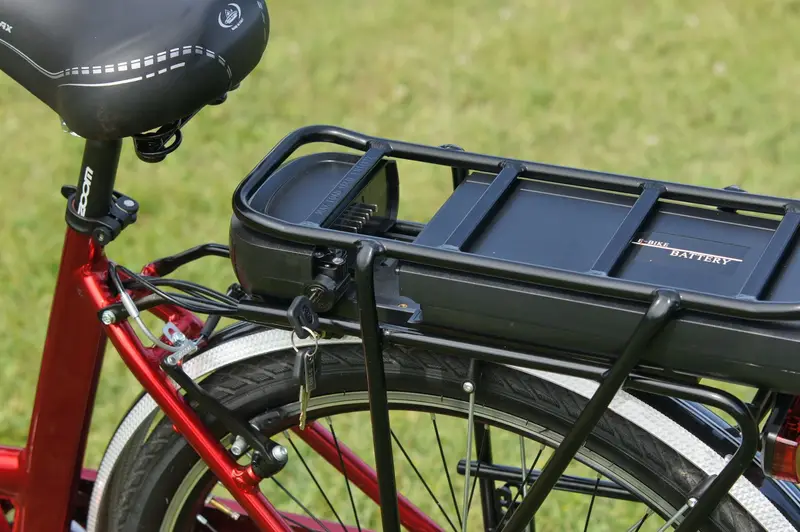
Range is the number every delivery rider actually cares about, and the honest one is 45 to 110 km on a charge, mixed terrain, real rider weight, not the lab figure printed on the box. Where a bike lands in that range depends on battery size, motor, and how much of the shift is spent on throttle instead of pedalling, which is the trade-off nobody puts on the spec sheet: throttle-only riding empties a pack faster than pedal-assist, every time.
Charging a typical 500 Wh pack costs roughly $0.12 to $0.20 in electricity, and a genuine pack, tested to the standard UL Solutions uses to check for overcharging and short circuits, is good for 800 to 1,000 full charge cycles before it drops to 80% of new capacity, three to five years at normal use. A delivery shift isn't normal use, it's close to a full cycle most days you work, so the right ebike battery for delivery riders is oversized on purpose, not by accident.
If one pack genuinely won't cover the route, the fix is a second battery, not a bigger bike. The Super73 M1D is dual-battery capable out of the box, roughly doubling its real range for exactly this reason, and our full look at when a second pack is worth it runs the maths in more detail than fits here.
Payload capacity matters more than top speed
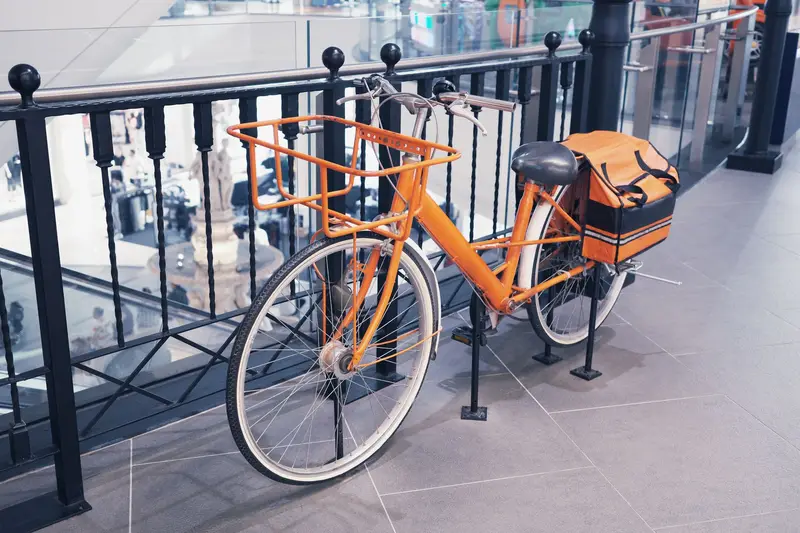
Nobody has ever lost a shift because the bike topped out at 20 mph instead of 28. Riders lose shifts because a rack rated for a laptop bag folded under three bags of groceries, or a frame flexed under a load it was never built to carry. Payload capacity, not top speed, is the number that actually matters once the bike is loaded.
The RadRunner carries a 320 lb payload rating, rider included; step up to the RadRunner Max and that rises to 420 lb. Most bikes in the range weigh 22 to 30 kg unloaded, cargo-rated bikes 30 to 40 kg, worth knowing if you're carrying the thing up a flight of stairs to charge it overnight rather than parking it in a garage.
Brakes matter here too, more than on a leisure bike: fifteen stops an hour with a loaded rack rewards hydraulic discs, not the cheap mechanical calipers that fade halfway through a wet shift. It's not a glamorous spec. It's the one that stops you sliding into the car ahead of you the exact moment its driver decides indicating is optional.
The real running cost of a delivery route

I track the running cost of anything with wheels, which is a personality trait more than a hobby at this point. I ran the numbers on my own second car back in 2019, worked out it cost more a month than most of the bikes we sell cost once, sold the car, and never looked back. Apply the same maths to a delivery route and the case for a bike gets even more one-sided, because you're riding it for pay, not just the school run.
Riding 100 km costs roughly $0.10 in electricity against $8 to $15 for the same distance by car, once fuel's counted, and that's before parking, tickets, or the ten minutes you'll spend circling a block a bike would have skipped entirely. Run a full shift's worth of kilometres through that gap and the per-shift saving against a car is a large part of why e-bike delivery works as a business model, not just a lifestyle choice.
Here's the opinion I'll defend: the price you pay isn't the cost you carry. A cheap bike that saves four hundred dollars up front and then needs a new pack in eighteen months, on a route ridden five days a week, is the expensive option, not the bargain. Total cost of ownership is the number that actually decides whether a bike paid for itself, and it rarely shows up on the price tag.
A bike that quits mid-shift costs you the whole day
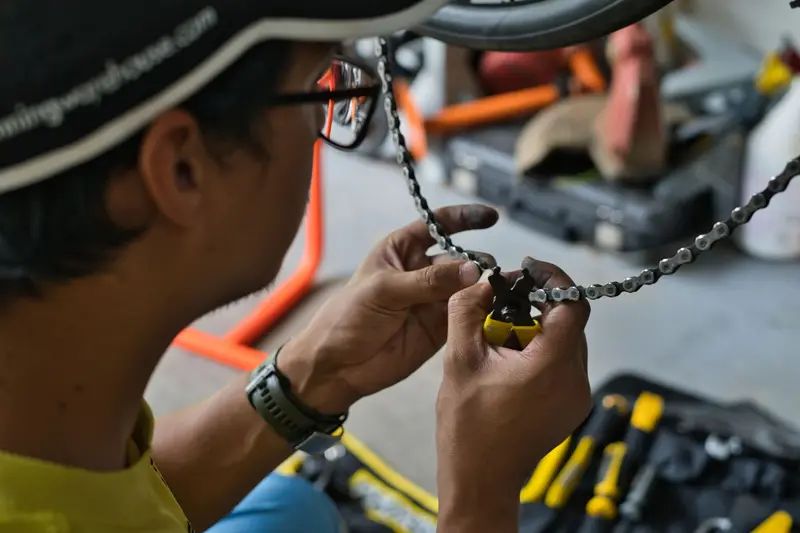
A bike ridden five or six days a week for hours at a time finds every weakness in a battery and a motor faster than a weekend rider ever will. This is exactly the environment cut-price marketplace e-bikes fail in fastest: uncertified cells, a motor no shop stocks parts for, a brand that's three letters and a shrug the day something breaks. Losing a bike mid-shift doesn't just cost the repair, it costs the whole day's earnings.
Every bike here carries a 1-year warranty on frame, motor and battery as standard, the battery guaranteed to hold 60% of its rated capacity at the one-year mark, workshop-checked before it ships rather than drop-shipped from a warehouse that's never seen it. The CPSC's own micromobility safety guidance exists largely because of bikes exactly like the ones this section is warning you off. If it's the wrong bike for the route, the 14-day ride-it-and-see return window is there before you've committed a month of shifts to finding out the hard way.
None of that makes a bike indestructible. It makes it the kind of indestructible a Nokia 3310 was indestructible: not immune to problems, just built by someone who expected you'd use the thing every day and doesn't go quiet when you give us a shout about it.
When a delivery e-bike isn't the right call
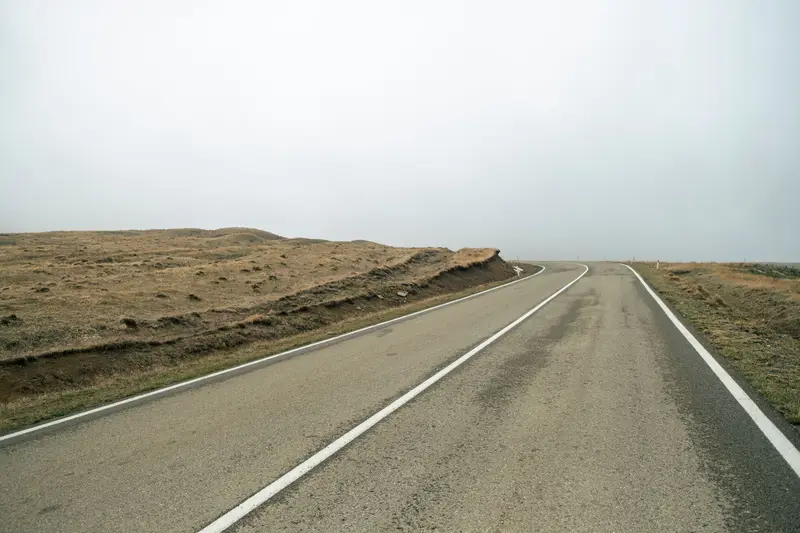
Here's the bit most delivery-bike guides skip, because their business model is convincing you to buy something. A bike is the wrong tool for a route that's mostly rural highway, spread further apart than a real-world 45 to 110 km range covers without a charging stop. That's a scooter's job, or a car's, not a bike's, and no battery upgrade fixes a route that's simply too spread out.
Same goes if the loads are consistently bigger than a bike frame is rated to carry: bulk grocery runs, furniture, anything that needs a van's floor space rather than a rack. Buying a heavier bike to chase a payload number a van clears without trying is a way to spend real money solving the wrong problem.
And if you're doing this occasionally rather than as the main job, a few deliveries on a Saturday between a car you already own and insure, the bike doesn't pay for itself the way the running-cost maths above assumes. That maths works because the bike replaces near-daily car use. It doesn't work nearly as well replacing three trips a month.
Get the route right first. The class, the battery and the payload rating all fall out of that one decision, not the other way round.
Straight answers

Is it legal to use an e-bike for delivery work?
Generally yes, but it rides on class and region. Class 1 and 2 e-bikes are treated like bicycles in most US states and the EU, no licence or plate required, though some cities add their own delivery-specific rules on lanes, speed or insurance. Check local rules before you start a route, not after.
Should I get an electric bike with throttle for delivery work?
For most routes, yes. An electric bike with throttle available (Class 2) makes stop-start city delivery far less tiring than pedal-assist alone. Save Class 3's higher pedal-assist speed for longer, faster routes with more road riding and fewer stops.
What's the best ebike for food delivery?
There's no single best ebike for food delivery, since the route decides it: a Class 2 with a throttle and a rated rack, like the RadRunner, covers most city routes. Longer, faster routes suit a Class 3 or a dual-battery setup instead.
How many miles can an ebike do for delivery?
Real-world range runs 45 to 110 km (28 to 68 miles) depending on the bike, the battery size, and how much of the shift is spent on throttle versus pedal-assist. A dual-battery setup roughly doubles that for riders covering longer routes.
Can I ride a delivery e-bike in the rain?
Yes. E-bikes built for real use handle wet weather fine. The parts that actually suffer are the chain and brakes, which need a rinse and a check more often on a bike ridden daily in poor weather than one ridden for fun on weekends.
How much maintenance does a delivery e-bike need?
More than a weekend bike, because the miles add up faster. Tyre pressure, chain lube and a brake check weekly rather than monthly is the realistic schedule for a bike doing several hours a day, and it's the cheapest way to avoid a mid-shift breakdown.
What's the best way to stop a delivery e-bike getting stolen?
A lock rated for the bike's actual weight and value, not a cable lock bought for a childhood bike, plus parking it somewhere visible during stops. Our accessories guide covers what an e-bike-rated lock actually needs to survive, a different bar than a regular bicycle lock clears.
Marcus Hale
Sold his second car in 2019 and hasn't looked back; tracks every cent a bike saves him.
Keep reading
Browse the range
Still not sure which one? Give us a shout.